
Share this page: |
||
 |
Fred Hagstrom: “I come to book arts through printmaking. After many years of working in traditional print formats, I have gravitated to working in the book form because I like the clarity of working with specific content, being directed by a story. My work varies in style as I try to find the right approach to each story. |
|
Collaborations with Greg Hewitt |
||
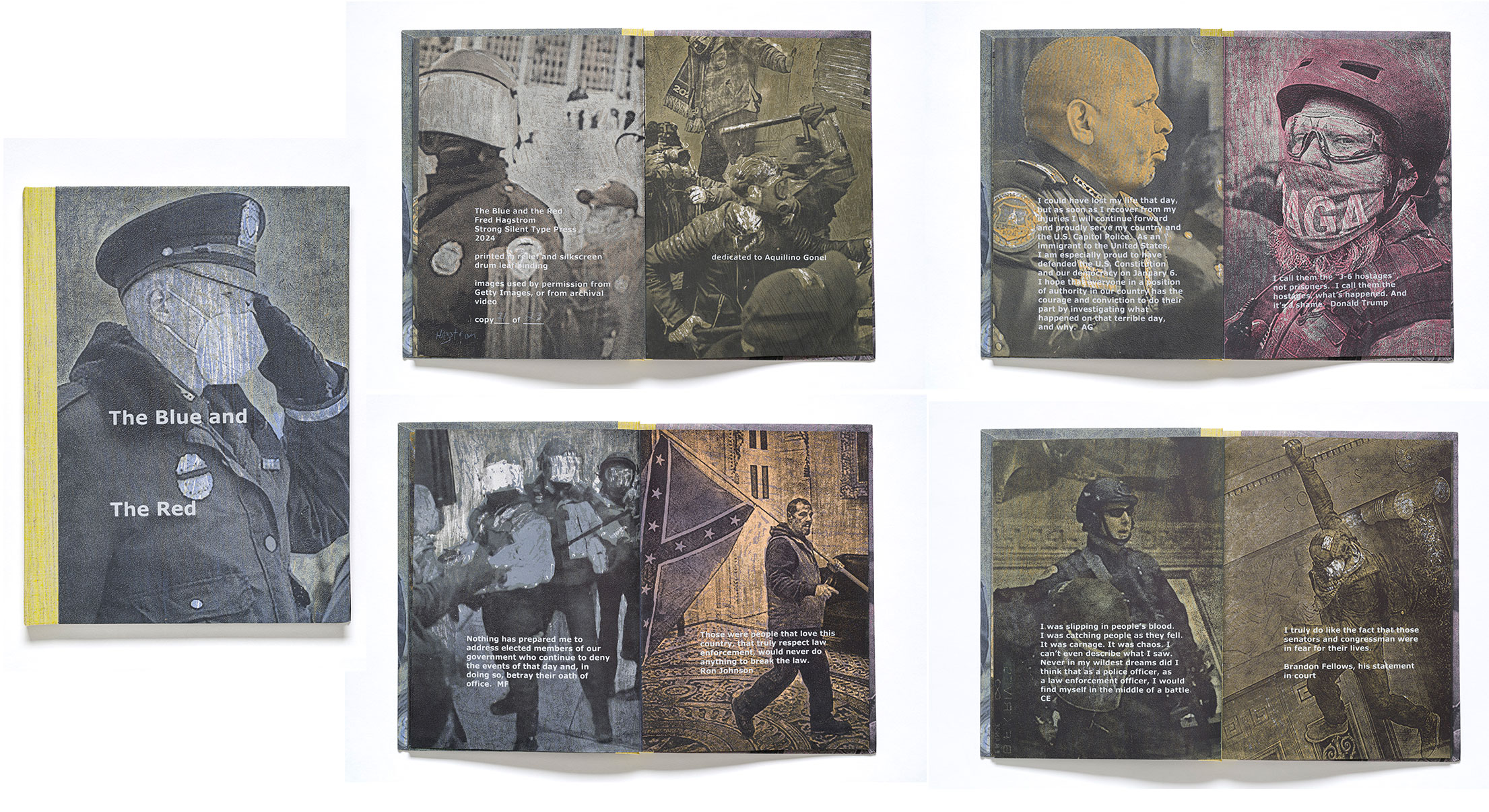
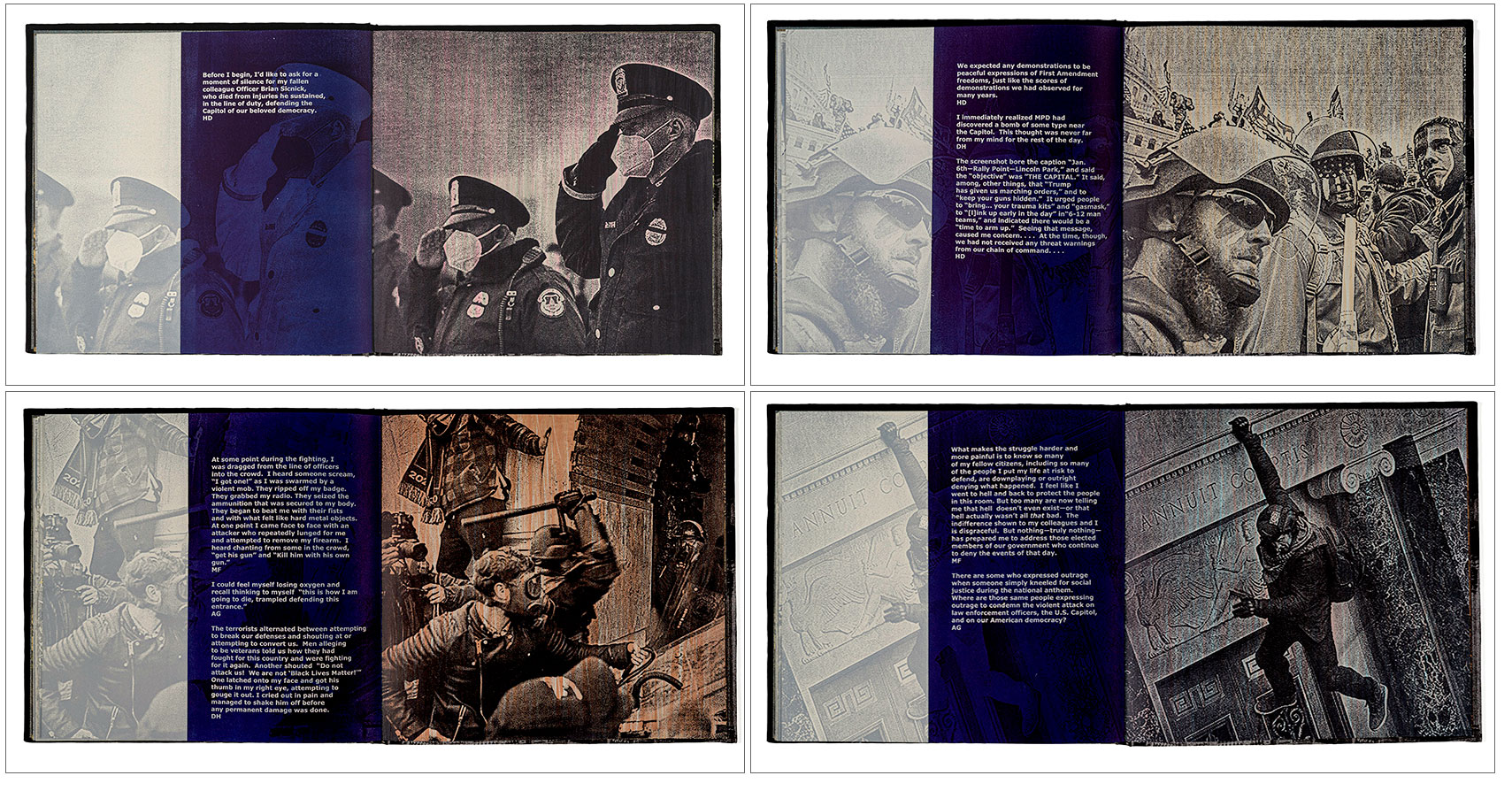
The Blue and The Red 15" x 11'; 28 pages. Printed in relief and silkscreen. Drum leaf binding. Signed and numbered by the artist. Fred Hagstrom: "’The Blue and the Red’ uses archival photographs from the January 6th attack on the capitol, coupled with comments by the Capitol Police, convicted rioters and politicians who spoke in support of the attack. Much of the text comes from congressional or court testimony, while the quotes from politicians come from media sources."
“The Blue and The Red” is Hagstrom’s second book on the events of January 6th. The first book “January 6” is now out of print. “The Blue and The Red” is dedicated to Aquillino Gonell , U.S. Capitol Police Sgt. Gonell is an emigrant from the Dominican Republic and a U.S. Army veteran who served in Iraq, Gonell said rioters called him a "traitor" as they attacked him. |
 Click image for more |
|
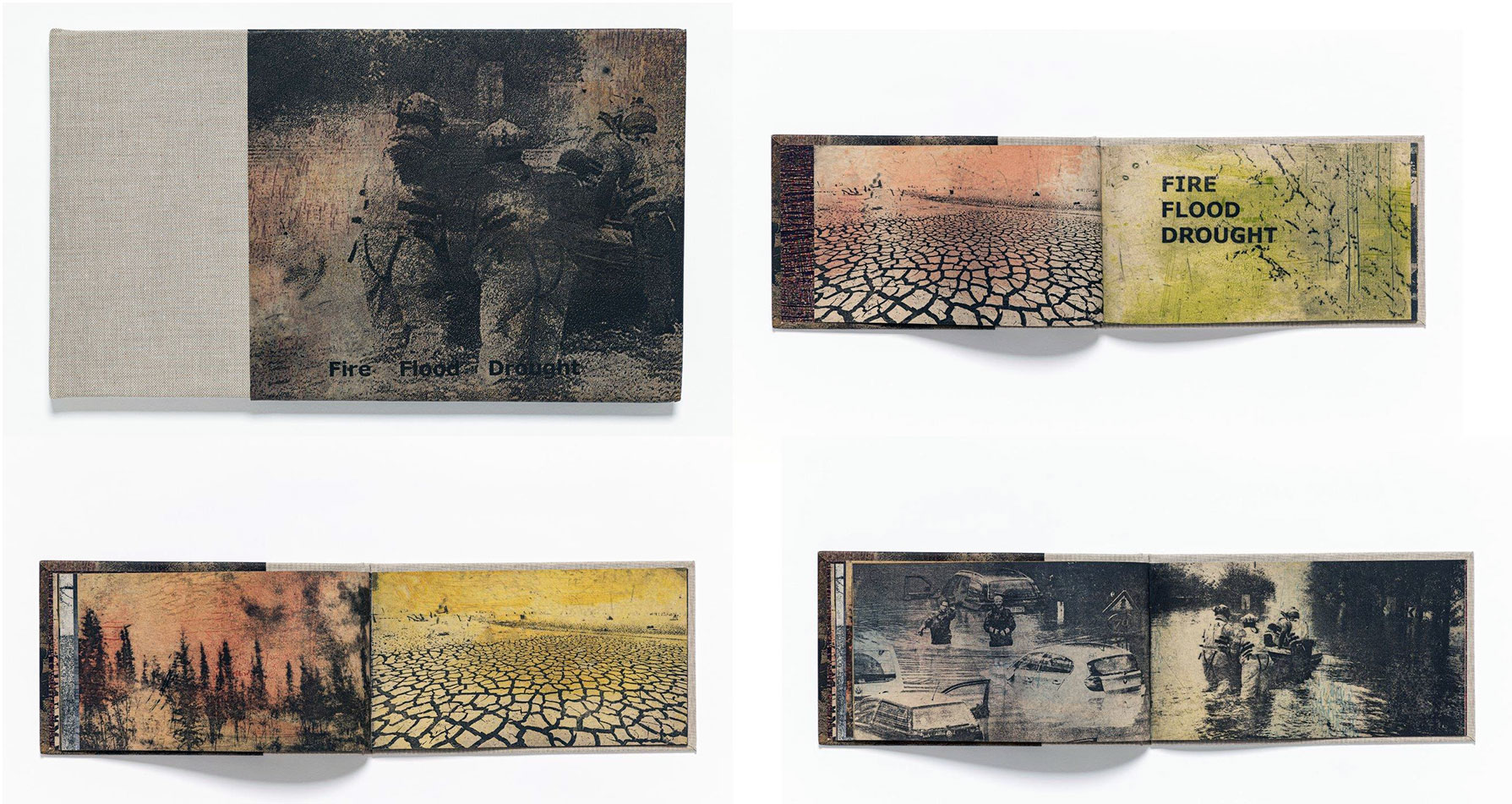
Fire Flood Drought 7.5” x 13”; 24 pages. Printed in color intaglio. Relief printed end pages. Bound in cloth with image and title on front board. Signed and numbered by the artist. Fred Hagstrom: "''Fire Flood Drought' is a wordless book with a series of images showing the damages of climate change. It is intended as a kind of meditation, contemplating the range of issues created by our changing natural environment.” |
 Click image for more |
|
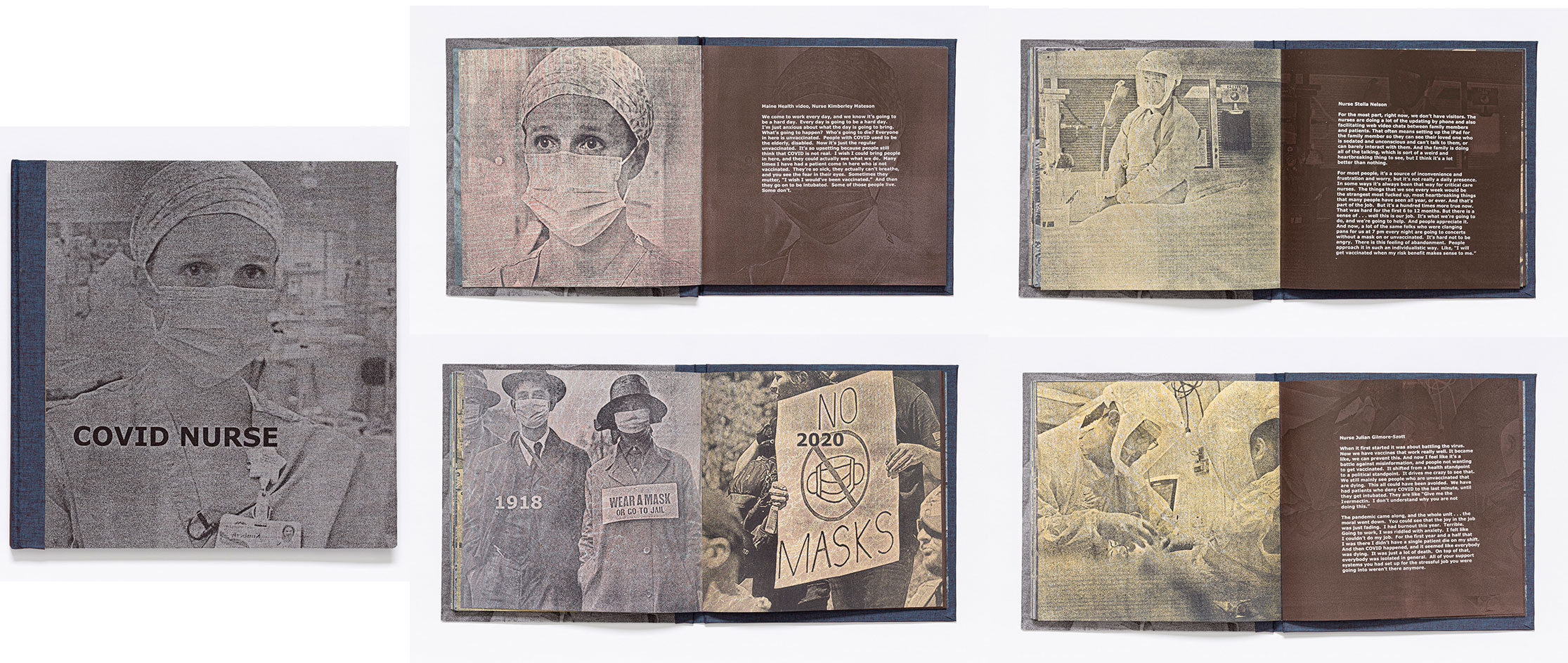
COVID Nurse 14.5 x 14.75"; 30 pages. Printed in relief from laser cut blocks Drum leaf binding. Numbered and signed by the artist on the colophon. Images and text reference documented on colophon. page. Fred Hagstrom: "'I did this book as a tribute to the medical workers who have given so much, and suffered so much, during this pandemic. I interviewed nurses and also found text from videos that were available to the public." Text quotes from COVID nurses:
$1,000 |
||
| Poetry with illustrations bookworks | ||
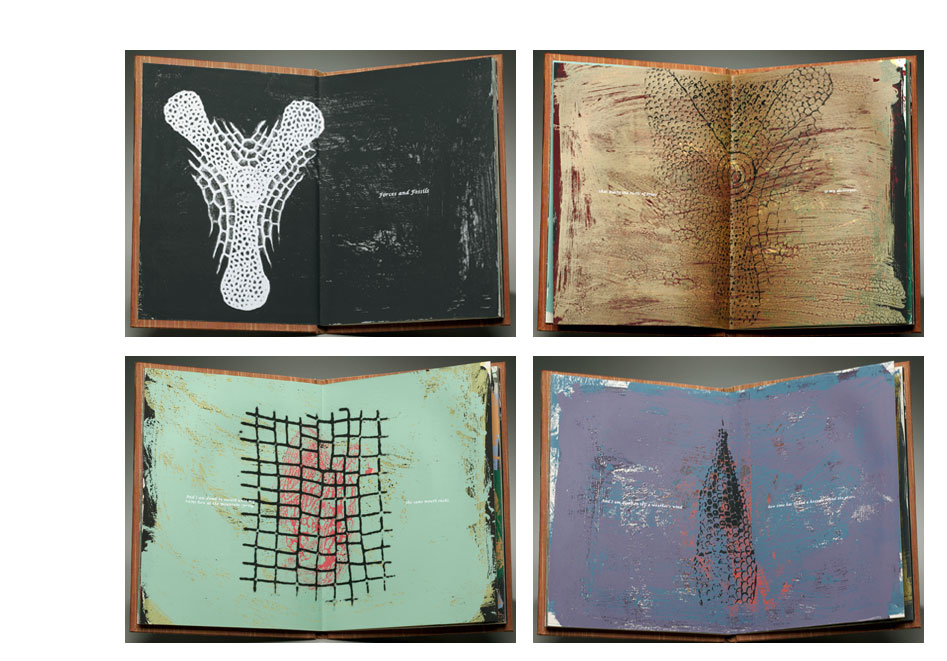
| Forces and Fossils Poem by Dylan Thomas St. Paul, Minnesota: Strong Silent Type Press, 2011. Edition of 25. 11.25 x 15.25"; 24 pages. Silk-screen printed. Drum leaf binding. Bound in cloth with an inset slate panel on front board. Colophon: "The images are from illustrations by Ernst Haeckel in RADIOLARIA, 1862. The text is by Dylan Thomas The Force that through the Green Fuse Drives the Flower from THE POEMS OF DYLAN THOMAS, copyright 1939 by New Directions Publishing Corp." Fred Hagstrom: "While the poem is certainly open to multiple interpretations, to me it has always been about the basic forces of nature, particularly about the renewal that comes in the cycle of life and death. The Haeckel images are some of the most beautiful drawings/prints I have seen in natural history illustrations. Radiolaria are a form of protozoa that produce intricate mineral skeletons. The forms of the actual specimens that make up the Haeckel illustrations are incredibly intricate and diverse. I was struck by the beauty of these forms from nature and wanted to pair them with a poem that I find equally beautiful." $900 (Last Copy) |
 Click image for more |
|
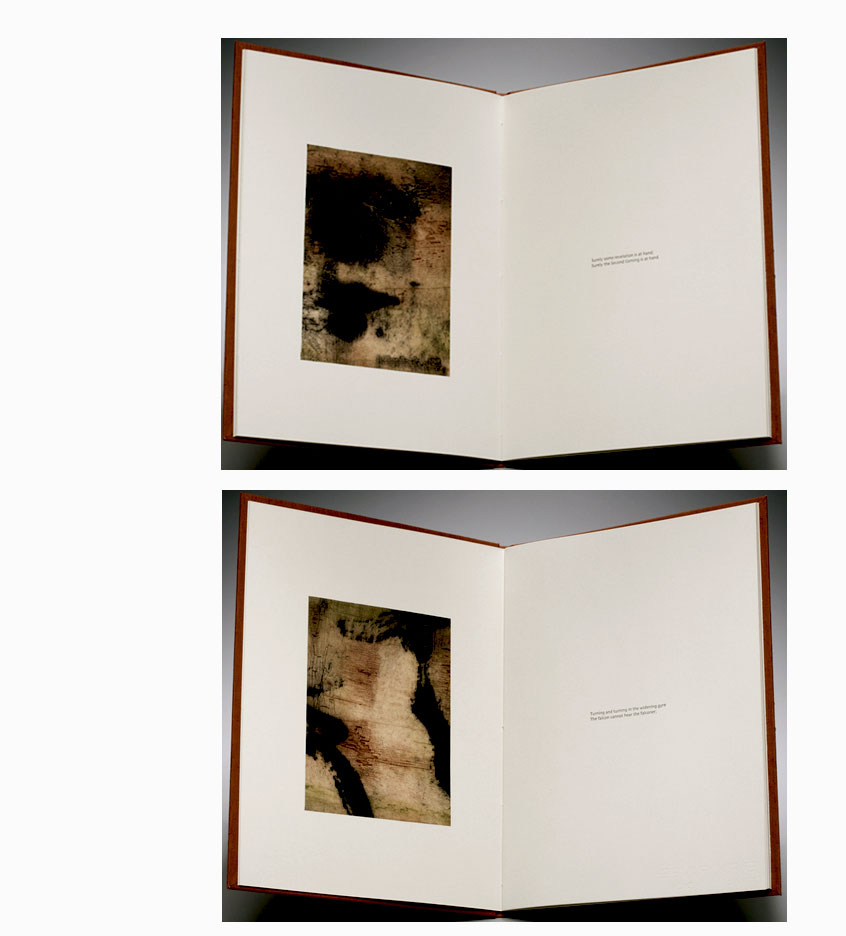
The Second Coming 11.25 x 14.5"; 24 pages. Printed from polymer plates on BFK Rives Gray. Font is Myriad Pro. Three-color intaglio prints (the rectangular images) by Hagstrom from plastic plates applied to the base paper with chine-collé. Metal engravings by Gillespie (the round images) are printed in color then applied chine-collé to the base sheet of paper. Chine-collé paper is Iwaki. Bound in cloth-covered boards with a circular metal engraving (by Gillespie) on the front cover. Strong Silent Type Press: "The Second Coming is based on the poem by William Butler Yeats. The book contains five hand engraved intaglio prints by Oscar Gillespie, and five intaglio prints by Fred Hagstrom. ...Yeats' text is about moments of great change in the world, evoking images from the Middle East and the beginning of Christianity. We chose this text because we think it is a beautiful poem, but also quite significant at this point in time, still close to the millennium, and at a time of violent change in the Middle East. We chose not to do a literal illustration of the images from the poem, but instead hope that we have served the text well through our own interpretation of it." Fred Hagstrom: "Each of us tried in our own ways to respond to the poem. Neither of us wanted to do illustration in the sense of actually depicting a visual image from the poem. ... I like a kind of very open response to the text in which you can still relate the images to the text. … Oscar and I discussed a little bit the fact that his son has served in the Middle East during this time, and I certainly feel that the text – moments of great change, the ideas of changes at the end of important time periods, along with how much of the poem invokes images from the Middle East – none of this can be separated from the current wars there." |
 Click image for more |
|
| This section deals with the works that Fred Hagstrom has researched and printed regarding nuclear/bomb testing. | ||
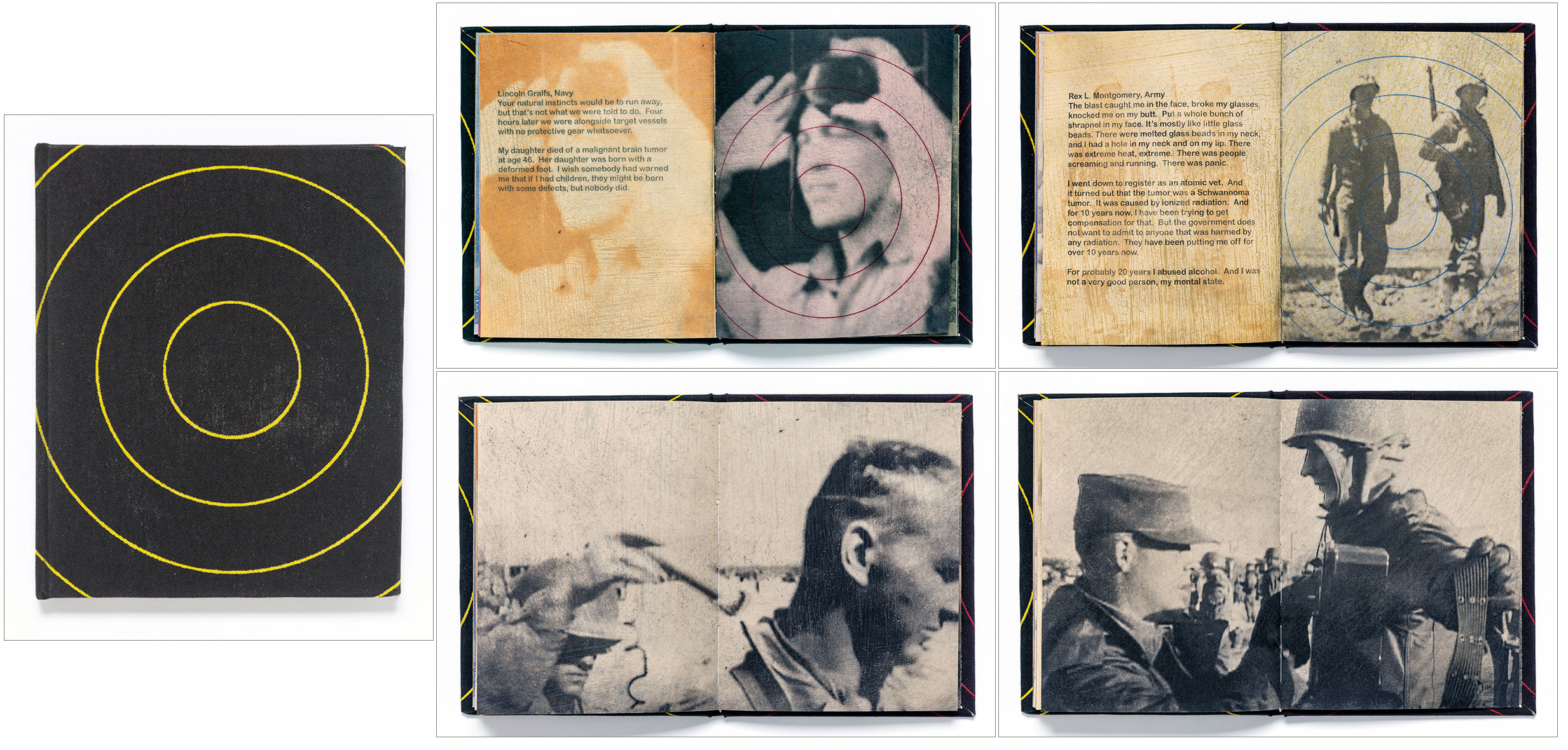
Testing 8 x 10"; 30 pages. Printed in intaglio from polymer plates. Printed on Anigoni papers. Ariel Rounded MT Bold for text font. Codex binding with cloth boards. Illustrated pastedowns. Includes bibliography with data and photo sources. Signed and numbered by the artist. Fred Hagstrom: "''This book is about the experience of the ‘nuclear vets’, service members exposed to radiation during nuclear bomb testing." Introduction: “Between 1945 and 1980, the US, USSR, UK, France, and China carried out more than 500 atmospheric tests of nuclear weapons totaling the explosive equivalent of 440 megatons of TNT. These tests injected radioactive material into the atmosphere, much of which were widely dispersed before being deposited as fallout. Cancer investigators have been studying the health effects of radioactive fallout for decades. “The US conducted 196 atmospheric tests, with 86 in Nevada. The largest in the US was the Hood test on July 5, 1957, detonated from a balloon at 15,00 feet and 74 kilotons.” Excerpts: “Government figures estimate between 400,000 and 550,000 American military personnel participated in a variety of nuclear tests between 1946 to 1992. “The service members were told to never speak of their experience in the nuclear tests- even to each other or to close family. It could be punishable as treason “Darrel Robertson, Army – ‘As I placed those gloves over my eyes and sat there and when it went off, I thought, this is odd, I think I see the bones in my fingers.’ “Jim Dangerfield, Army - We were just like an experiment animal that you’d use in a lab. And I think a lot of my lumps and that, these nodules I have had taken out of my body is due to that. I’ve had more than 30 taken out. They knew everything that was gonna happen and what danger was involved in it, and they are just hoping you all die before they have to do anything.” |
||
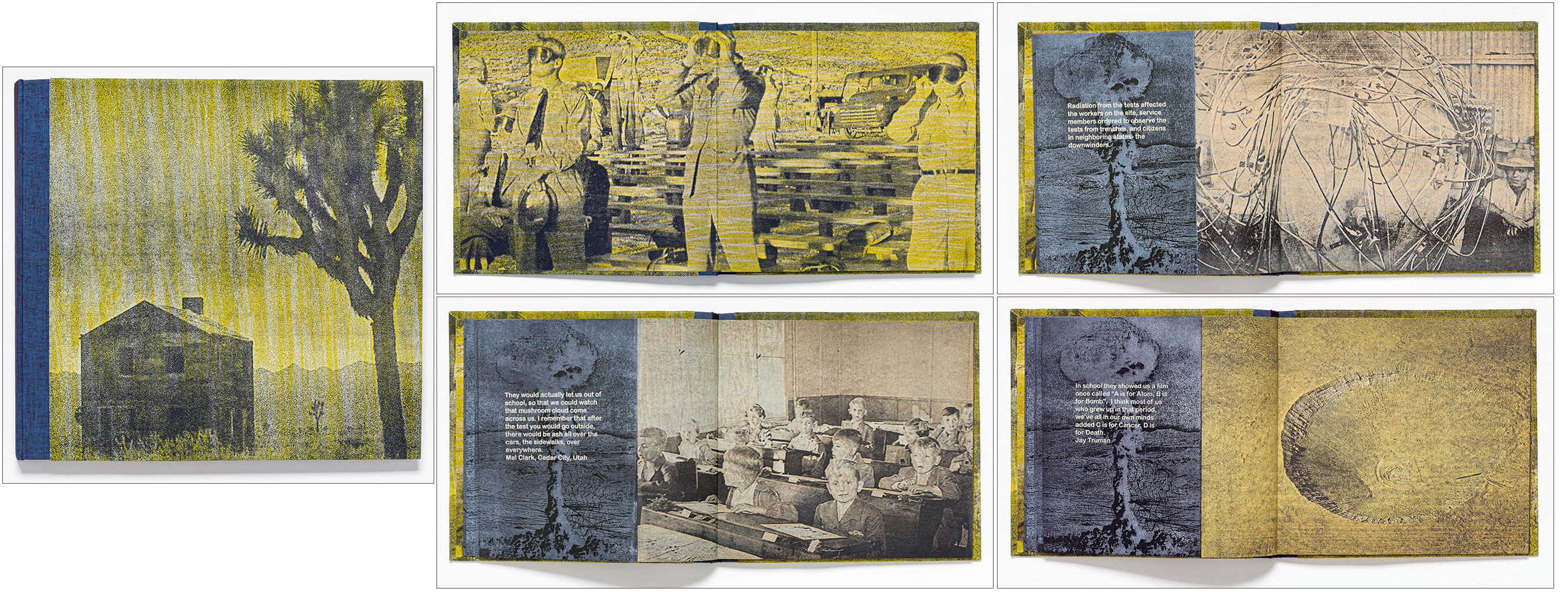
Testing (Book Two): Downwinders. 13 “x 13.5”; 28 pages. Printed in relief. Ariel Rounded MT Bold Font. Drum leaf binding.{Relief printed free end pages and pastedowns. Relief covers with cloth spine. Signed and numbered by the artist. Sources noted in colophon. Fred Hagstrom: "’Testing: Book Two Downwinders’ documents the experiences of residents of the Southwest who were exposed to radiation from 126 atomic bombs detonated at the Nevada test site from 1951 to 1963." Introduction text: “Radiation from the tests affected the workers on the site, service members ordered to observe the tests from trenches, and citizens in neighboring states – the downwinders.” These tests are prime examples of what has become known as collateral damage - “inadvertent casualties and destruction inflicted on civilians in the course of military operations.” Text excerpts:“In school they showed us a film called A is for Atom, B is for Bom. I think most of us who grew up in that period, we’ve all in our own minds added C is for cancer D is for Death.” “The only country that ever bombed our civilians with nuclear weapons was our government. We killed our own. They just assumed we were all cowboys and Indians and a bunch of Mormons out here, and that we didn’t matter.” “You would grab hold of a sheep to move in into a corral or a little pen, and the hide- the wool, the skin, everything, would just pull right off of them. Just like they had been baked in a microwave.” |
 Click image for more |
|
| Collaborations with Greg Hewitt - poetry and printmaking. | ||
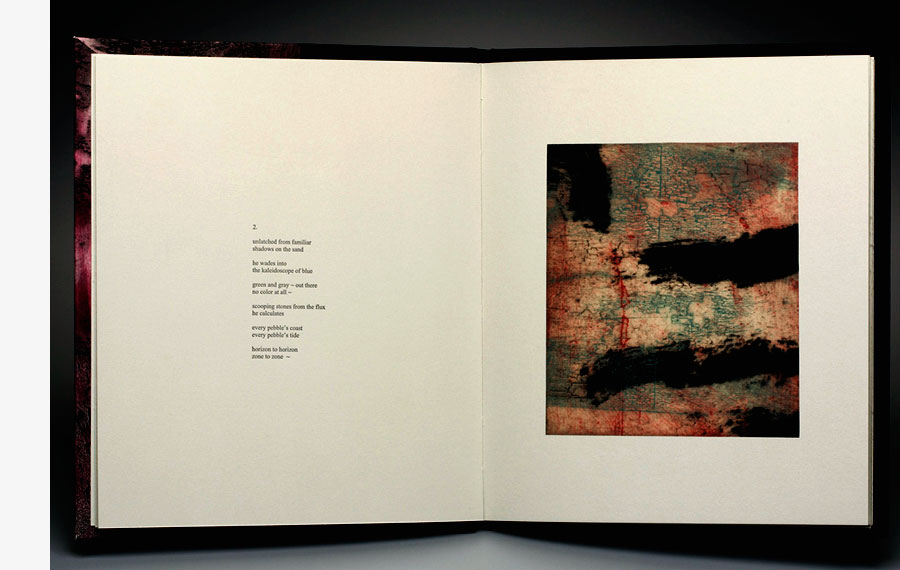
His Small Self Constant, Variable 11 x 13"; 18 pages. Intaglio images from plastic plate in three colors. Text printed letterpress from polymer plates. Base paper Rives Gray. Images applied chine collé on Iwaki paper. Codex binding. Black cloth covered boards with intaglio print on front board. Poetry by Greg Hewett; 10 images by Fred Hagstrom.
|
 Click image for more |
|
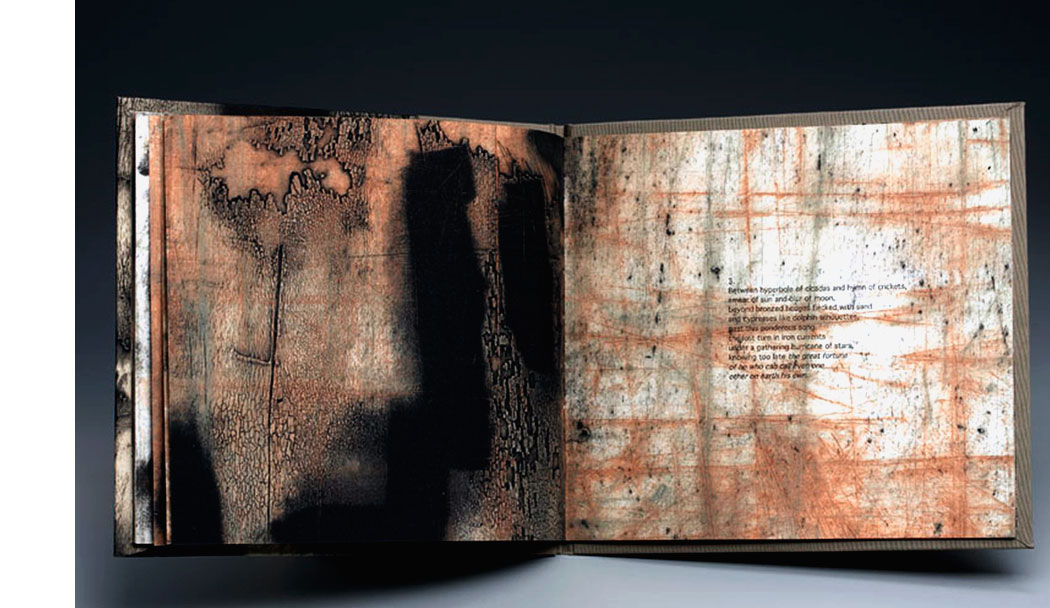
Echo 11 x 10"; 15 pages. Text printed letterpress from polymer plates. Intaglio images printed in three colors from plastic plates on full page. Codex binding. Cloth-covered boards with print on front board. Printing assistants: Megan Fitz and Paloma Barhaugh-Bordas.
$600 (Last Copy) |
 Click image for more |
|
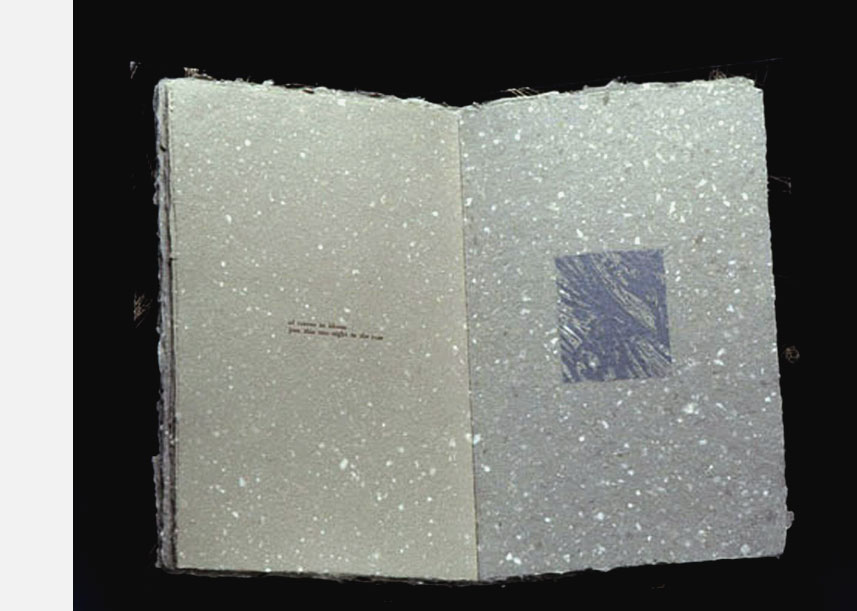
First Light 7.75 x 12"; 30 pages.16 block prints (relief engraved images) printed in silver from plastic plates by Fred Hagstrom. The prints are produced with a technique like wood engraving, but done on polystyrene, a hard plastic, rather than word. Hagstrom was "one of the first to promote use of plastic for engraving." The images are carved into the plastic with engraving tools — a burin and half-tone rake. Text printed from set type in brown ink. Printed on handmade paper. Bound in black paper covered illustrated boards with black cloth spine. Cover relief printed from etched copper plate (the lines that would be black in an intaglio print are white and the surface or raised portion is white) with 2.5 x 3" block print image tipped on front board. Codex binding with hard cover and black cloth spine. Printing, binding, papermaking by Molly Kent and Jesse Trentadue. Two poems by Greg Hewett with image by Hagstrom: "Five Appearances of the Noumenon" and "Night-Blooming Cereus."
$350 (Last Copy) |
 Click image for more |
|
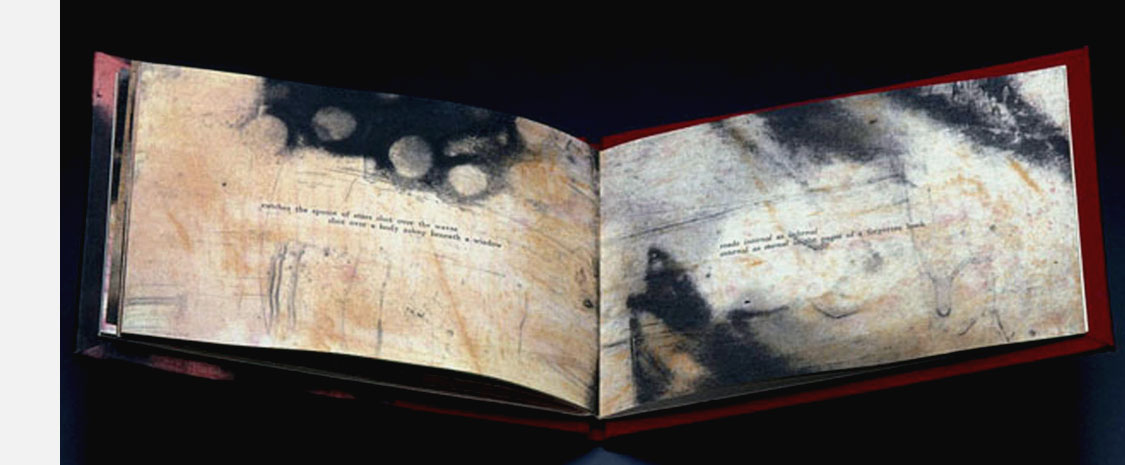
Junked 9.5 x 6.25"; 24 pages. Full-page images printed intaglio in three colors from plastic plates by Fred Hagstrom on BFK Rives. Text letterpress from handset type. Signature hardcover binding. Bound in maroon cloth covered boards with intaglio image on front board. Printing assistance by Molly Kent. Poem by Greg Hewett accompanied with images by Fred Hagstrom. Fred Hagstrom: "Greg and I discuss the basic theme of each next book, then work fairly independently before I try to connect images to words in an appropriate manner."
$400 (Last Copy) |
 Click image for more |
|
| Strong Silent Type Press Out of Print Titles: | ||
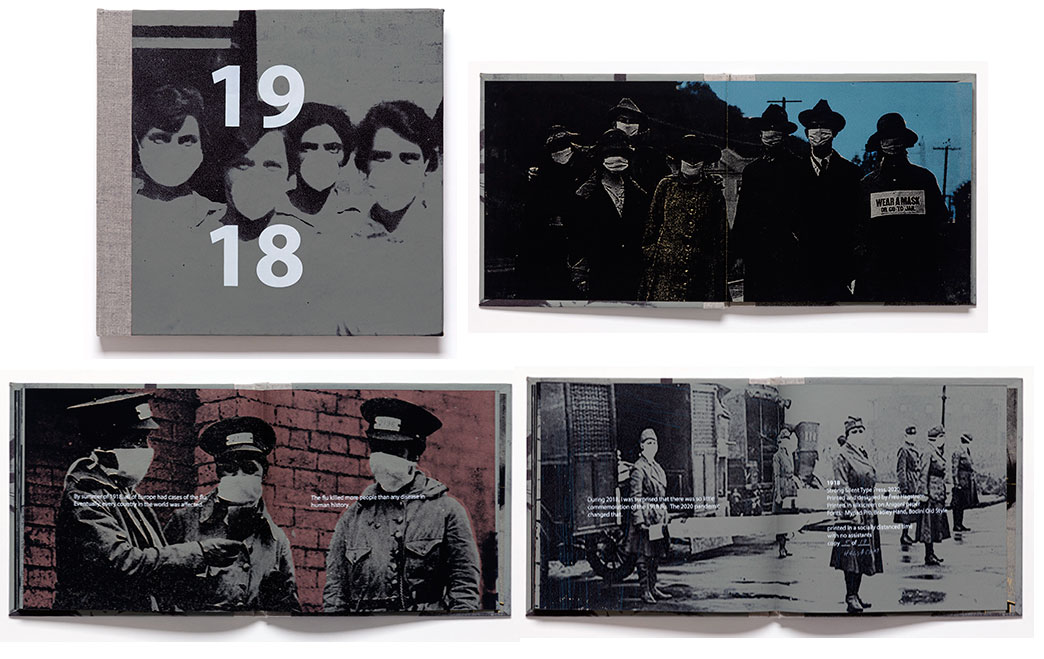
1918 13" x 14"; 34 pages. Printed in silkscreen. Drum-leaf binding. Numbered. Signed by the artist. Fred Hagstrom: "During 2018 I was surprised that there was so little commemoration of the 1918 flu. The 2020 pandemic changed that. "This book includes statistics and personal letters from the 1918 Spanish Flu, along with images from that pandemic. The disease killed more than 650,00 people in the U.S. and the estimated death total world-wide was as high as 100 million. In contrast, the First World War killed 10-12 million." Excerpt: |
 Click image for more |
|
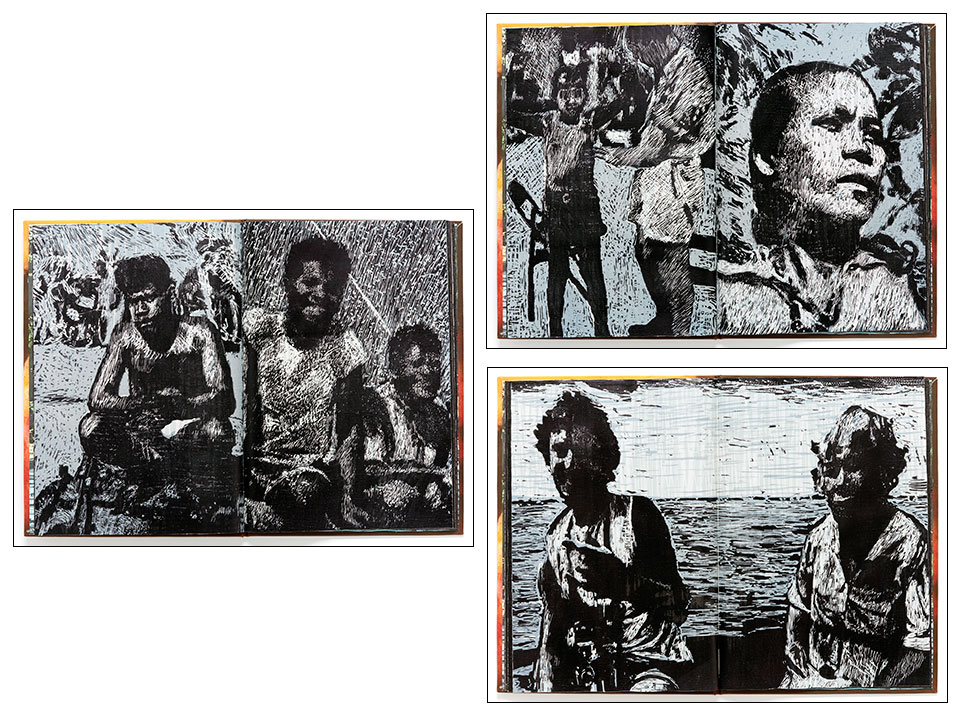
BRAVO Further Comments: "Most of the quotes come from interviews in two films – Nuclear Savage and Half Life. Some of the quotes come from articles my friend in physics found from science journals. "The images are carved into plastic plates and printed relief. The cover is intaglio, printed from 3 collagraph plates. The end pages are relief, each printed from 4 relief plates. The only silkscreen images are for the title page and the colophon. The text is printed in silkscreen over a base of relief printing from wood. The main pages with the images each have 4 layers--3 in stages of gray, plus the black key block." |
 Click image for more |
|
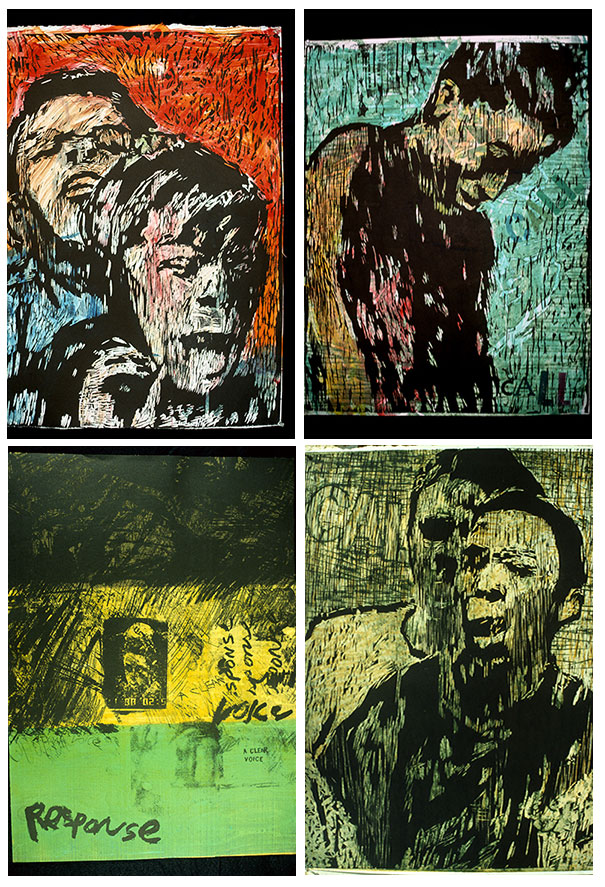
Call & Response 8 loose prints contained in a 30 x 24" cloth-covered portfolio. The prints are each 29.5" tall and vary in width from 23.5 to 21". This is also a print (the 9th) on front cover containing the title. Processes: woodcut; collagraph; lithography. Fred Hagstrom: "I was working that summer with a good student who was African American. She and I were both interested in work about social issues. We did not collaborate, but we worked together every day. 'Call and Response' is about racial issues. To greatly simplify things, the theme is that people of color have had to go through much strife, and yet they have added so much to American culture." |
 Click image for more |
|
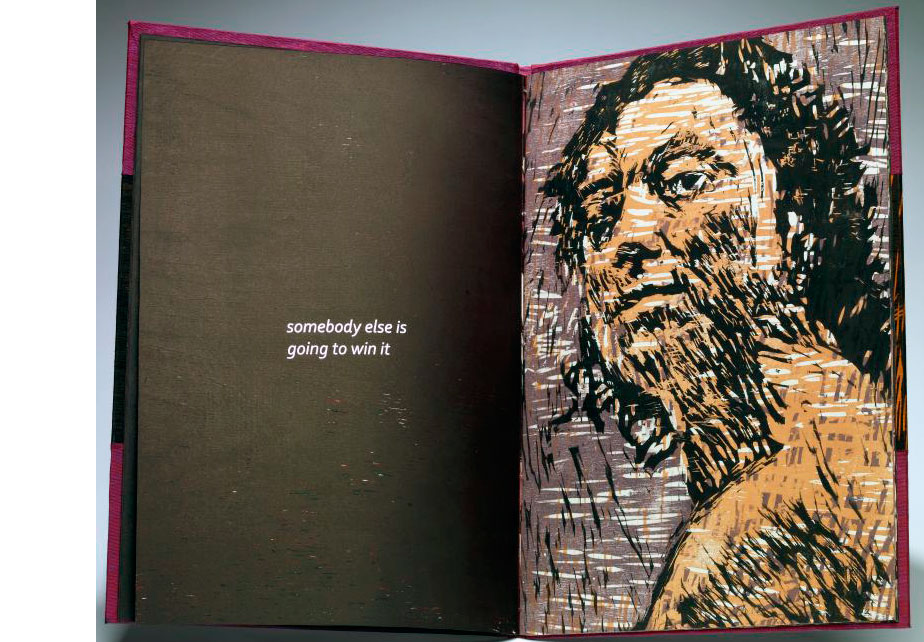
Can't Win 15.5 x 22"; 24 unnumbered pages. Twelve large format woodcut images printed in three colors. Text printed in silkscreen. Font: Corbel. Images and text design by Fred Hagstrom. Bound in cloth-covered boards with a woodcut (9.5" tall) that spans the middle of both front and back boards. Fred Hagstrom: "This book uses the text of a single poem by Charles Bukowski 'Lost.' Single lines of the poem are paired with large portrait heads that are carved in a rough drawing style. The intent was to emphasize the stark quality of the text. "The poem is about a general sense of frustration and lack of power, but it is impossible to read it in our current context without thinking about issues such as our current wars. That might be our military wars, our war on drugs, or any of our collective endeavors that seem to be bound up in such a sense of frustration or futility. I am sure one could also read it as a sense of personal futility as well, but for some reason it evoked in me a stronger impression of those public struggles that seem to go on with little hope of resolution." Hagstrom has transformed 'Lost' into 'Can't Win.' The move from description of circumstances to expression of futility is telling. Charles Bukowski (1920 - 1994) poet, novelist, and short story writer. "Lost" is a selection from Burning in Water, Drowning in Flame: Selected Poems 1955 - 1973 by Charles Bukowski, reprinted here by permission of Harper Collins. |
|
|
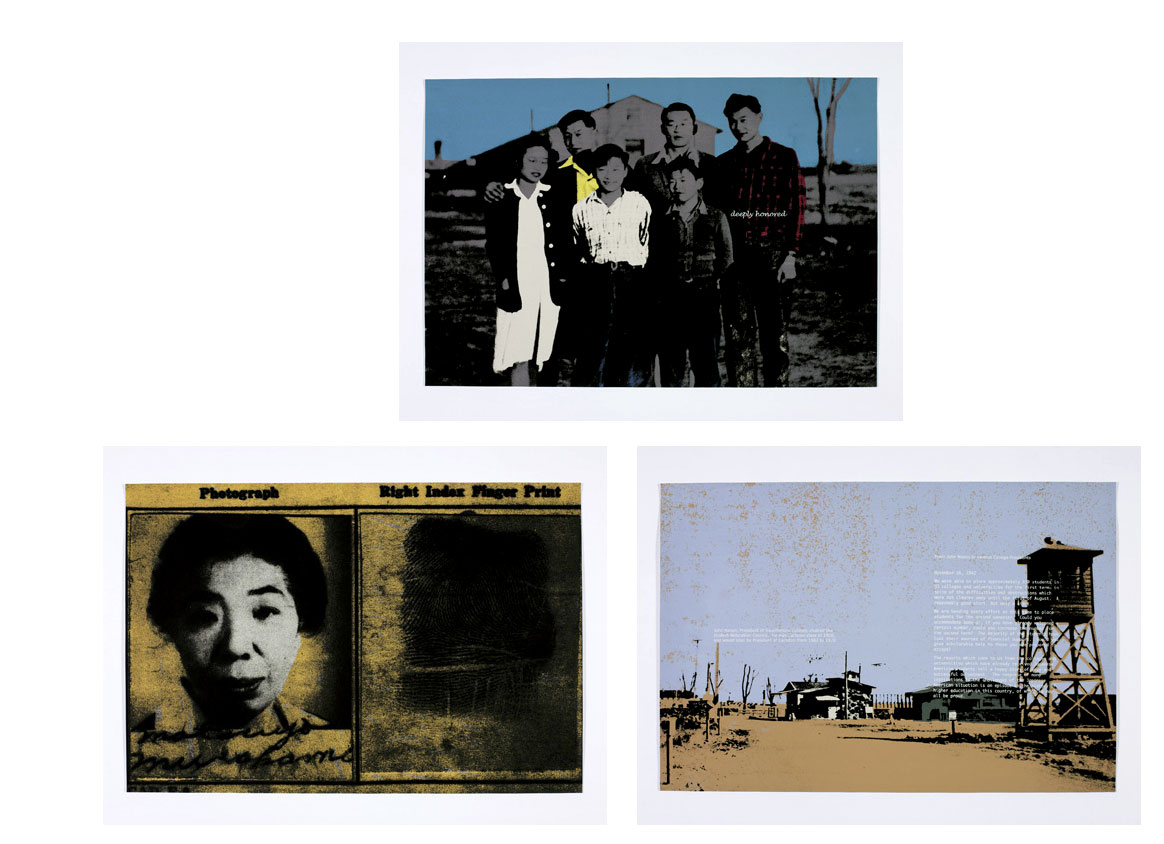
deeply honored Because of the great interest in this subject Hagstrom decided to create this second edition. Fred Hagstrom: "All of the images and text are the same, but the colors are quite different. I think I prefer the 2nd edition." |
||
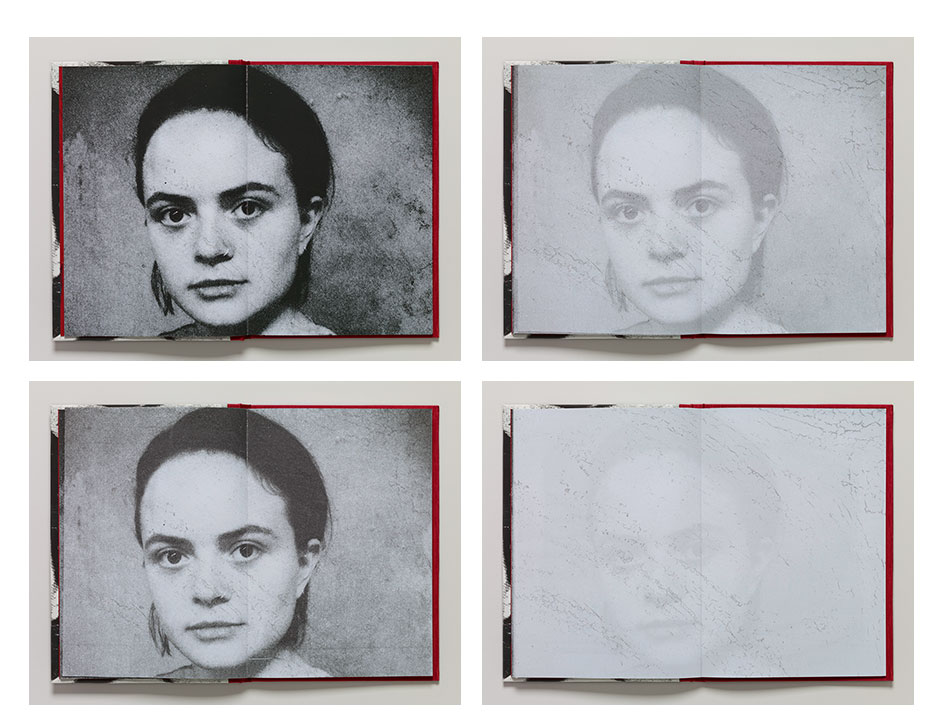
| Fade (Euridice) By Fred Hagstrom St. Paul, Minnesota: Strong Silent Type Press, 2015. Edition of 12. 10 x 14.75"; 20 pages. Printed silkscreen on Rives BFK paper. Text font optima. Bound in cloth over boards with silkscreen image on front board. Signed and numbered by the artist. Fred Hagstrom: "Fade tells the story of Orpheus and Euridice in visual terms. It uses little text, but conveys the moment when Euridice disappears from Orpheus's vision. It uses a single repeated image of the face of Euridice, becoming more faint with each turn of the page. Finally, the image disappears, and a segment of the classic text replaces the image. In some ways, this book is similar to the genre of the wordless novels, quickly read, but telling the story in a linear manner much like a silent film." (SOLD) |
 Click image for more |
|
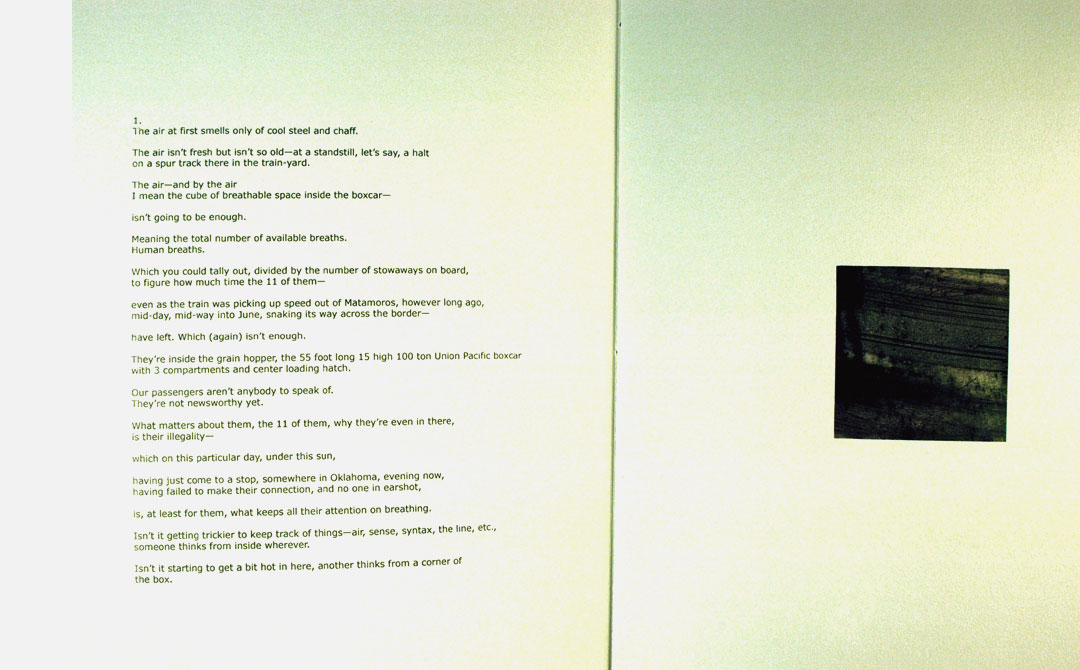
Kill Box 12.5 x 15.5 x 2"; 22 pages. Text in Veranda printed from polymer plates. Intaglio images printed chine-collé by plastic plates and letterpress. Paper is BFK Rives, gray, with Iwaki for the chine-collé paper. Bound in black cloth with tipped on image on front board. Housed in a black plywood box. Fred Hagstrom: "Text is by Joanna Rawson. Her poem is about a group of men trying to cross the border who die when they are sealed in a shipping container. I tried to use design and images to convey the claustrophobic sense of her words." This is the first publication of Rawson's poem. |
 Click image for more |
|
January 6 14 x 15"; 28 pages. Printed in relief from laser cut blocks. Signed and numbered by the artist. Fred Hagstrom: "'’January 6’ uses excerpts from the powerful testimony of four police officers made before congress on July 27, 2021. The images are iconic photographs from that day. The officers make clear how much they endured during that day, and after. They also make the point that people should be held accountable for having prompted or participated in the events of that day." Text Excerpt: “Despite being outnumbered, we did our job. Every member of the House of Representatives, Senator, and staff member made it home safely. Sadly, as a result of that day, we lost officers- some really good officers. We are not asking for medals or even recognition. We simply want accountability and justice. For most people, January 6 happened for a few hours that day. But for those of us who were in the thick of it, it has not ended.” |
||
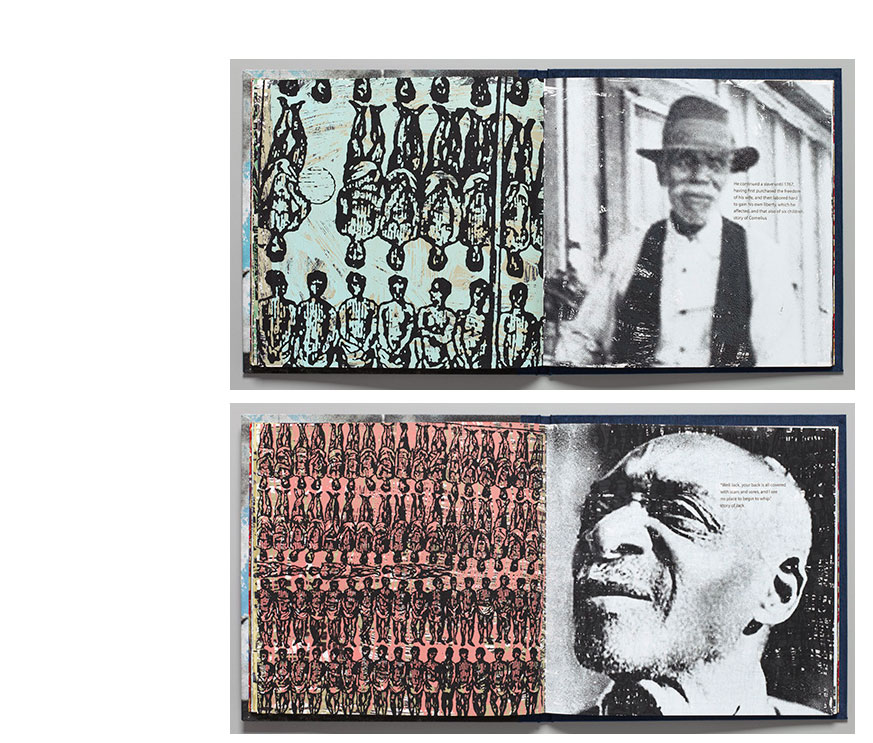
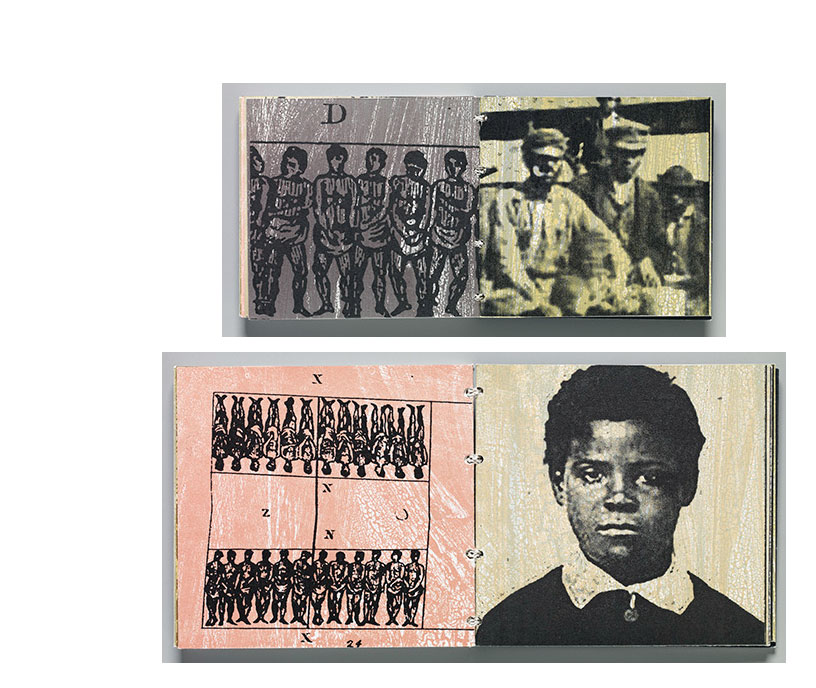
| The Little Book of Slavery By Fred Hagstrom St. Paul, Minnesota: Strong Silent Type Press, 2012. Edition of 20. 5.5" x 5.25"; 22 pages. Letterpress. Wire edge binding. Numbered on colophon. Fred Hagstrom: "The Little Book of Slavery was done in tandem with a larger related book on the topic of the slave trade titled Passage. Both books use images of the slave ship diagrams from an anti-slavery publication of 1788. During the work on both books I experimented with different processes and layering of color and texture. I was trying to use archival diagrams and photographs in a way that was consistent with the original quality of the images. In the Little Book the images are coupled with statistics on the economic issues of the slave trade." (SOLD) |
|
|
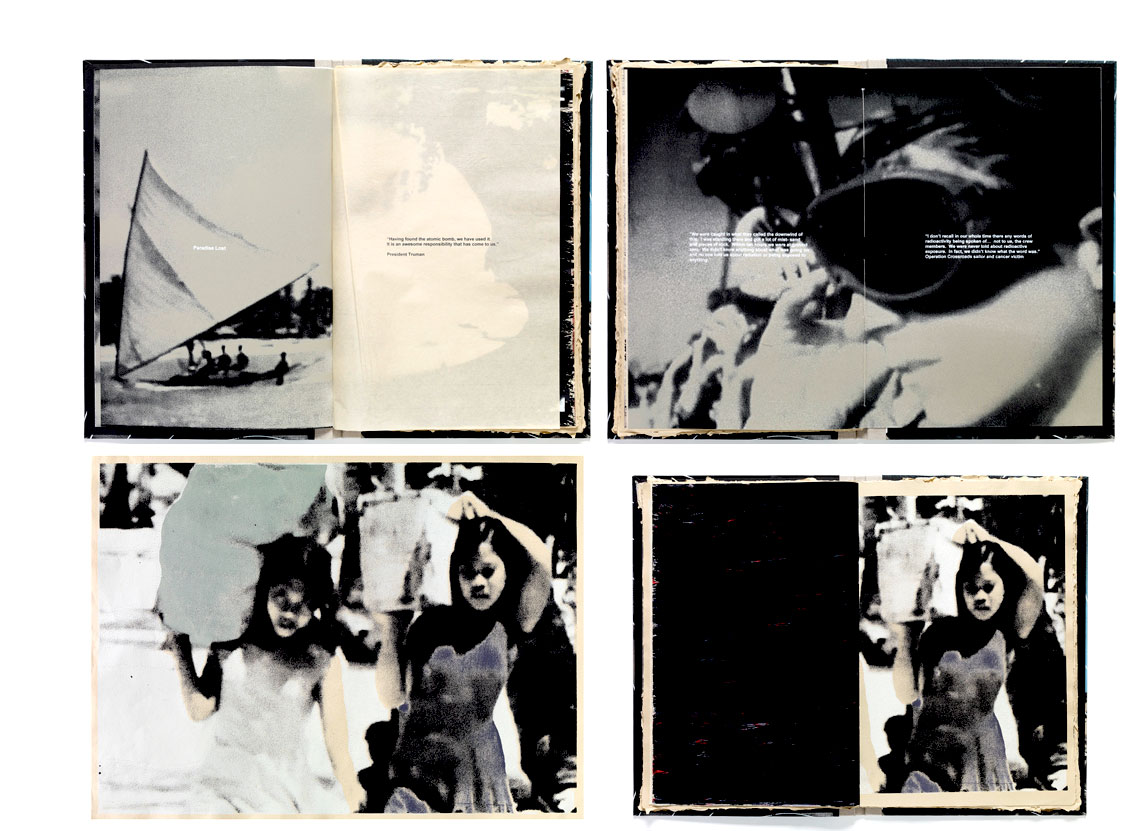
Paradise Lost 12.75 x 19"; 84 pages. Printed in silkscreen on Iwaki and St. Arnaud papers. Photo sources are from archival newsreels. Ariel typeface. Codex binding. Bound quarter cloth with silkscreen covers. Fred Hagstrom: "Paradise Lost is about nuclear tests in the Marshall Islands conducted by the US in the 40's and 50's. It focuses on the first two explosions on Bikini Atoll in 1946. The Bikinians were told that testing the bomb was essential to prevent future wars. They had no way of knowing that they would not be able to return to their island, and how greatly their lives would be affected by the tests. Bikini is still deemed unsafe for their return. The tests also exposed large numbers of service members to dangerous levels of radiation – the first of our atomic veterans. Many of these sailors spent much of their lives in treatment for diseases related to their exposure." From Paradise Lost: Operation Crossroads was the beginning of the nuclear test program, begun on Bikini Atoll in the Marshall Islands in July 1946. The fourth and fifth atomic explosions in history were detonated there in the Bikini Lagoon. A target fleet of 95 vessels was placed in the lagoon to test the power of the bombs against traditional navy ships. The Bikini islanders were moved to the island of Rongerik. 40,000 troops took part in the tests under the supervision of the U.S. Navy. Information from the Bikini website: "At the time of the evacuation of Bikini Atoll in 1946 there were 196 natives living on the island. As of 2012, 34 still survive. At this time [2012] the people of Bikini remain scattered throughout the Marshall Islands and the world as they wait for the cleanup of Bikini to begin in earnest, mostly due to the fact that the money they have received from the U.S. government is not adequate to fund a full radiological cleanup of the entire atoll." |
|
|
Passage Story of Jack: "Well, Jack, you back is all covered with scars and sores, and I see no place to begin to whip." |
 Click image for more |
|
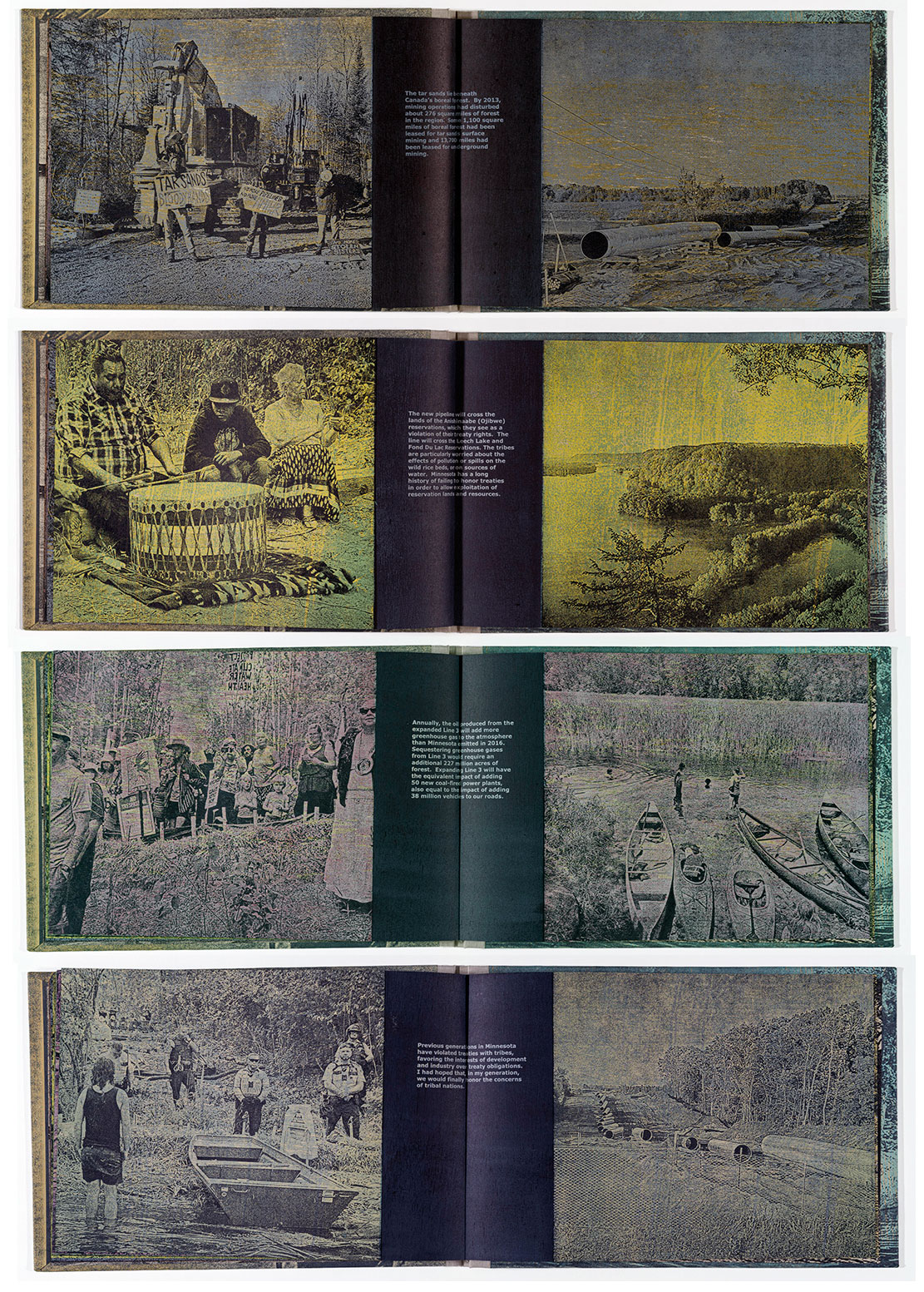
Pipeline 14 x 19.5"; 26 pages including pastedowns. Printed in relief from laser cut blocks. Verdana font. Annigoni paper. Drum leaf binding. Bound in illustrated boards with cloth spine. Signed and numbered by the artist. Fred Hagstrom: "'Pipeline' documents the ongoing protests against the construction of the Enbridge Line 3 oil pipeline that will take tar sands oil from Canada to Superior Wisconsin. It is actually a new line along a new route, leaving the old pipeline in the ground. The line crosses land that is held by tribes without honoring treaty rights. It is seen as a threat to the sources of water in northern Minnesota, including the Mississippi and numerous wetlands and streams in the Lake Superior watershed. Tribes are also concerned about the effects of possible spills on wild rice beds. The oil from this line will greatly add to emissions." |
||
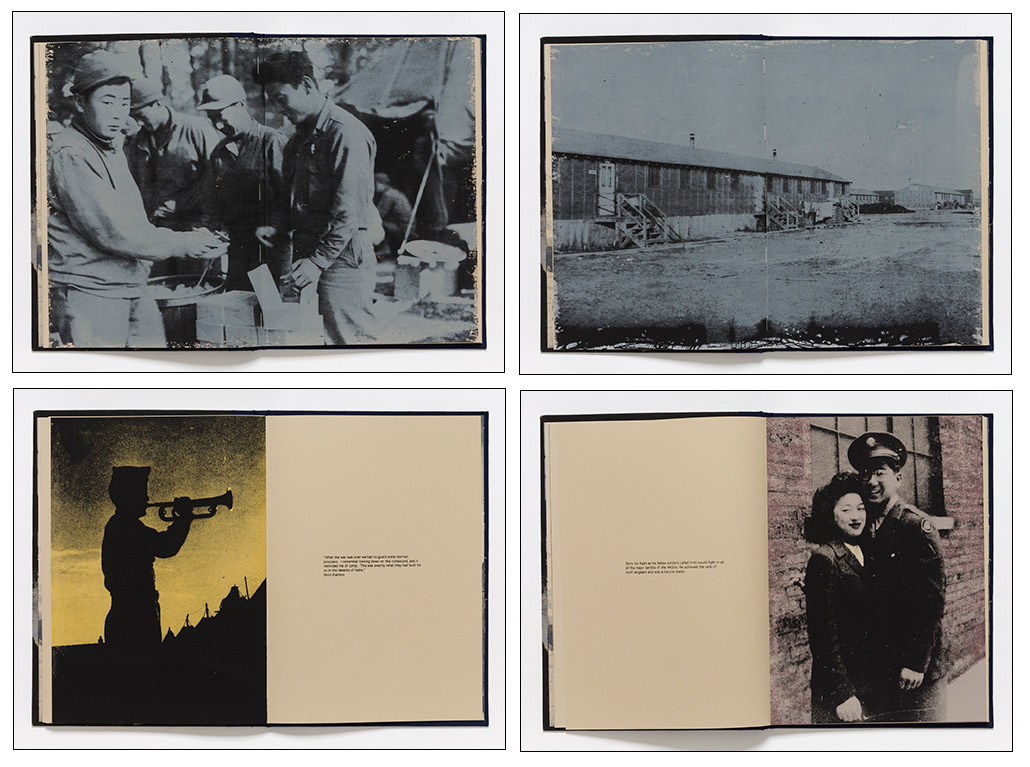
Returning Home 19 x 14"; 60 pages. Text printed in Geneva font. Silkscreen prints. Drum leaf binding. Cloth over boards with silkscreened cover. Signed and numbered by the artist. Text source material: Interviews with Louise and Debbie Kashino; Densho Archive interviews; Kash, a film by Vince Matsudaira; Fighting for America: Nisei Soldiers by Laurence Matsuda and Matt Sakai. Images sources: Kashino family; Densho Archive; National Archives and Records Administration. Fred Hagstrom: "Returning Home is the story of Shiro Kashino. He left the Minidoka internment camp in Idaho to join the 442nd, the segregated unit of Japanese– Americans who fought in Italy and France. He was a leader and received numerous medals. He was unfairly court-martialed, falsely accused. When he returned home, he and the other veterans of Japanese descent were denied membership in local veteran's organizations, so they started the Nisei Veterans Committee in Seattle. His mates from the 442nd felt that he had been mistreated, and they began a long campaign to get his rank and reputation restored. This finally happened, but only in the months after his death." Text excerpts:
Returning Home was the result of an earlier book by Hagstrom – Deeply Honored. In doing research for the earlier volume Hagstrom became interested in the Japanese American soldiers that fought in World War II and the internment of Japanese –Americans in the US. When in Seattle in the Spring of 2016 Hagstrom met with the Nisei Veterans Committee. There he learned about Shiro Kashino. |
 Click image for more |
|
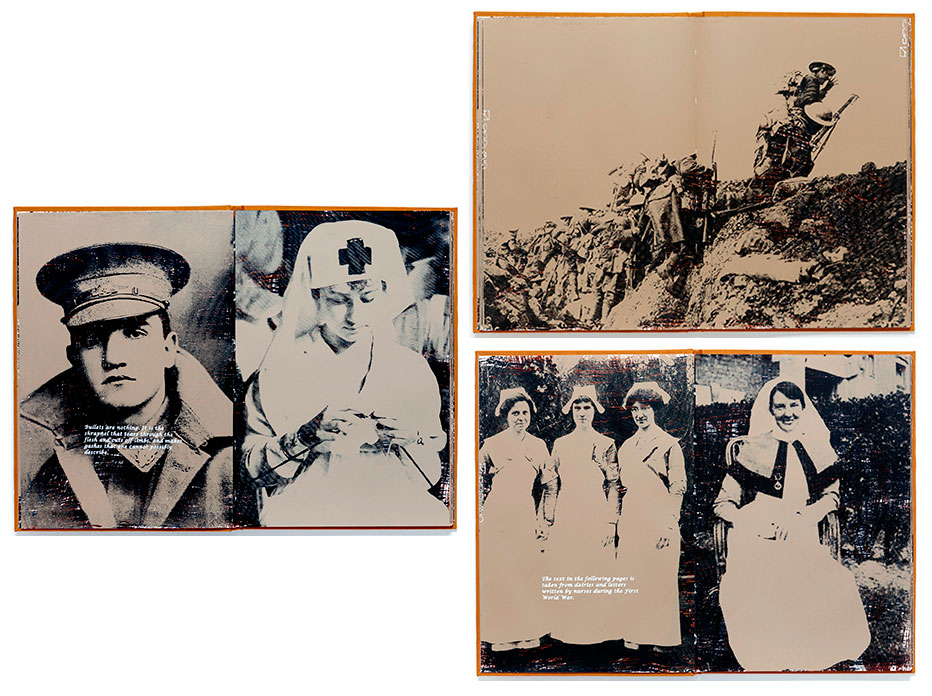
The Rose of No Man's Land 13 x 20"; 54 pages. Printed in silkscreen. Font: Lucinda Calligraphy. Hard case binding with cloth over boards. Signed and numbered by the artist. Text is from The Other Anzacs: Nurses at War 1914-1918 by Peter Reese, Allen and Unwin Press (2008). Fred Hagstrom: "This book is printed in the 100th anniversary of the final year of the First World War. It is in honor of nurses who served in that conflict. It highlights the incredible dedication and sacrifice of the women who served. It contains archival photographs of nurses, soldiers, and images from combat. The text is taken from the writings of the nurses." |
 Click image for more |
|
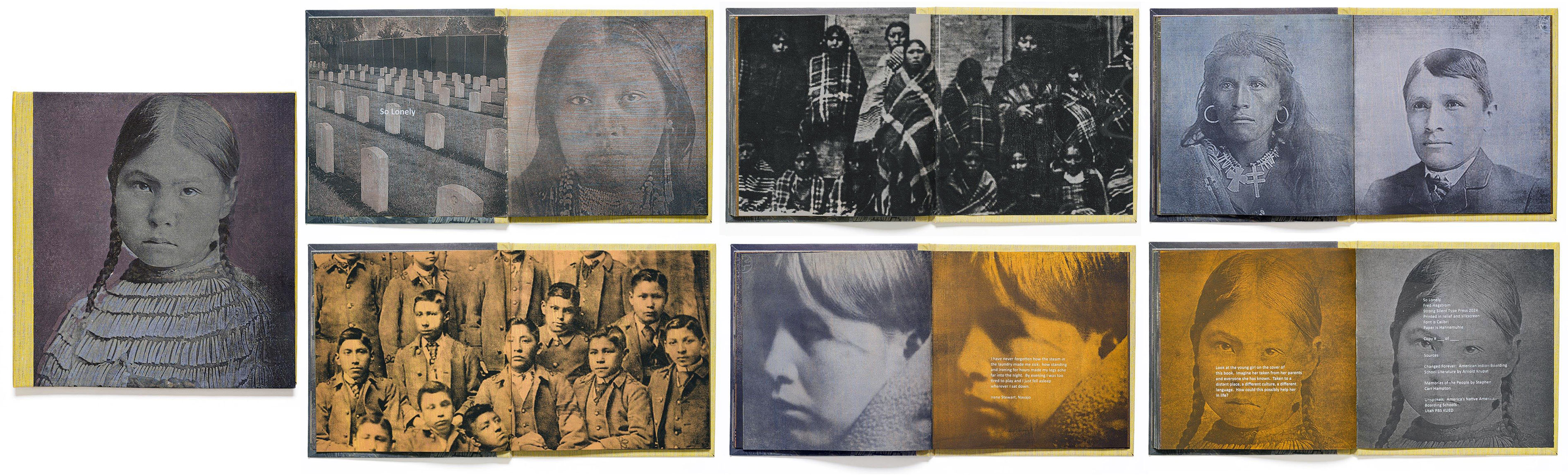
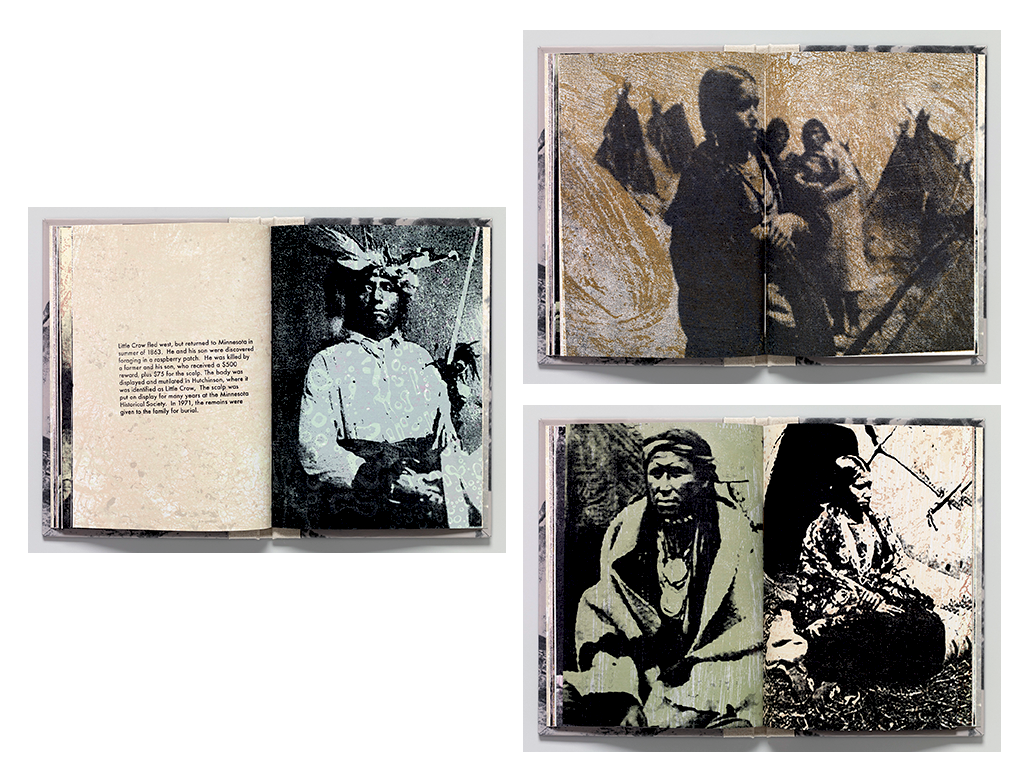
So Lonely 48 pages; 16" x 15". Printed in relief and silkscreen. Signed and numbered by the artist. Fred Hagstrom: “’So Lonely’ documents the lives of young Native Americans who were in the system of Indian boarding schools. The schools were a joint effort by the U.S Government and church institutions. They were often cruel and highly regimented in an effort to re-educate native children away from their culture. By 1926, an estimated 83% of Indian children were in boarding schools.” Sample text:
(SOLD/Out of Print) |
||
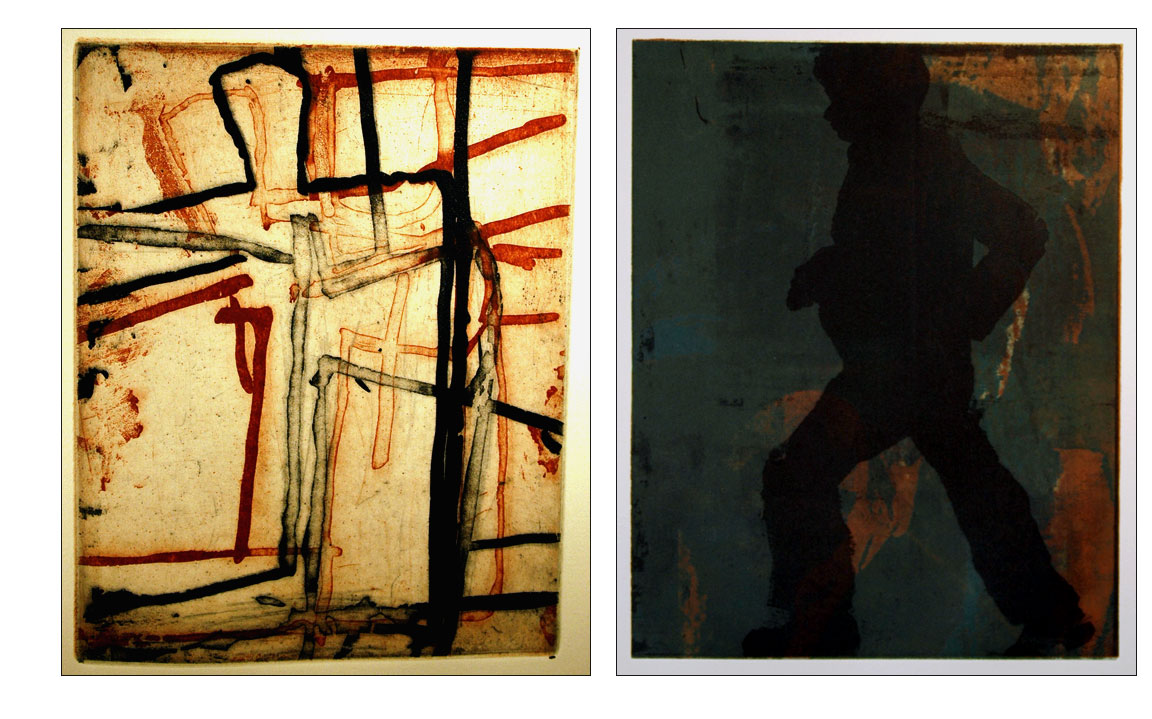
So many many 11 x 14.5"; 40 pages. Printed letterpress from polymer plates. Five intaglio images in three colors by Fred Hagstrom and five intaglio images in two colors by Graham Fransella (Melbourne, Australia). Codex binding in maroon cloth with detail from a Fransella intaglio image on front cover. Fred Hagstrom: "This book is based on a poem by Charles Bukowski, used with permission. The poem is about a sort of vacant feeling as we look around us at people we run into every day, and we tried to use images that helped to convey that feeling. The collaboration with an Australian artist came about due to my leading student trips to Australia and New Zealand every two years.... "The thing that has always mattered to me in art is narrative. In the past, I thought that telling a story required a kind of visual theater that used figures as the players. I now think that this was a narrow definition of narrative. In the art of indigenous people (Maori carving and aboriginal art from Australia) I have found a whole new way to think about a visual story. I see similar examples from different parts of the world such as Buddhist or Islamic art. Things that appear to be abstract can actually be a very specific, poetic narrative. You can learn to read these stories, and following the often difficult path of this reading can lead to a powerful kind of understanding. I have had only glimpses of this." |
 Click image for more |
|
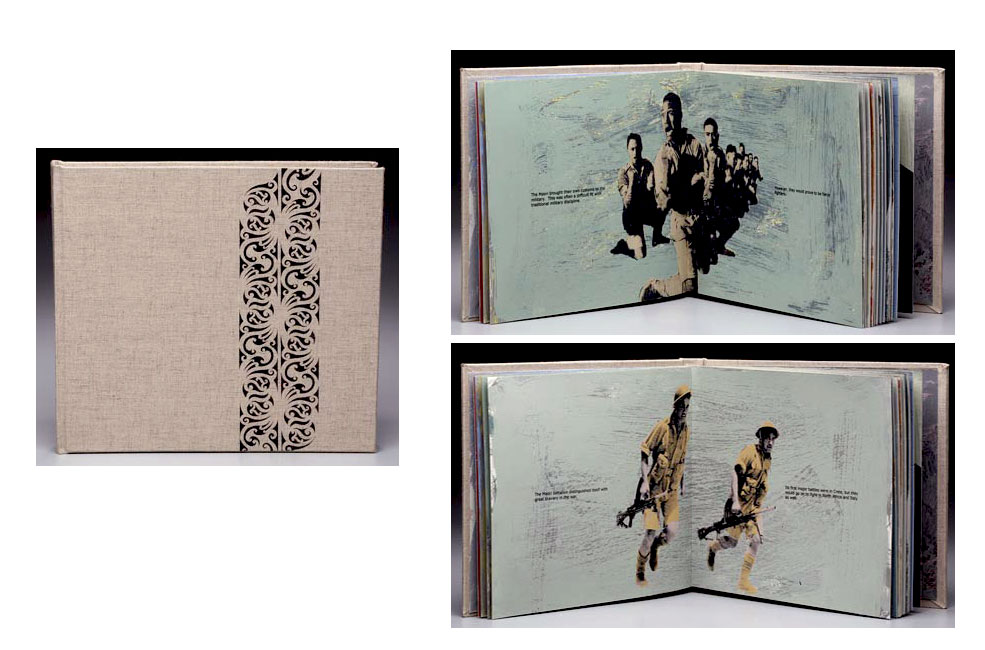
| Standing Place By Fred Hagstrom St. Paul, Minnesota: Strong Silent Type Press, 2012. Edition of 28. 10 x 11 x 1.25"; 42 pages. Verdana font. Silkscreen printed. Drum leaf binding. Cloth-covered boards with silkscreen printed illustration on front cover. Colophon: "Manos Nathan designed the Kawai pattern used on the cover. It is titled Tatai Hono, the joining of lines of descent. ... Thanks to Patricia Grace for allowing me to refer to her book Ned and Katina." Fred Hagstrom: "I take students to New Zealand every two years, and in doing that have made good friends at a Maori Marae, which is a tribal meetinghouse. This is the story of their parents. Ned Nathan joined the Maori Battalion at the start of World War II. Like other Maori, he came from a rural background, but wanted to serve to help to improve the standing of Maori people in New Zealand. The battalion's first major battles were in Crete. Ned was badly wounded, presumed dead, and was left behind as the British evacuated and left the island to German occupation. He made his way up into the mountains and was helped by villagers there. They risked everything to help the stranded British soldiers. He learned Greek and passed as a local when interviewed by the Germans. He also fell in love with a woman from the village. He was later captured and sent to a German POW camp. After the war, he returned to Crete to marry Katina. They moved to New Zealand where they raised a family, started multiple businesses, and helped many people from Greece and Crete to immigrate to New Zealand. They also founded the marae that I visit. This book is made in the friendship I feel for this remarkable family." (SOLD/Out of Print) |
|
|
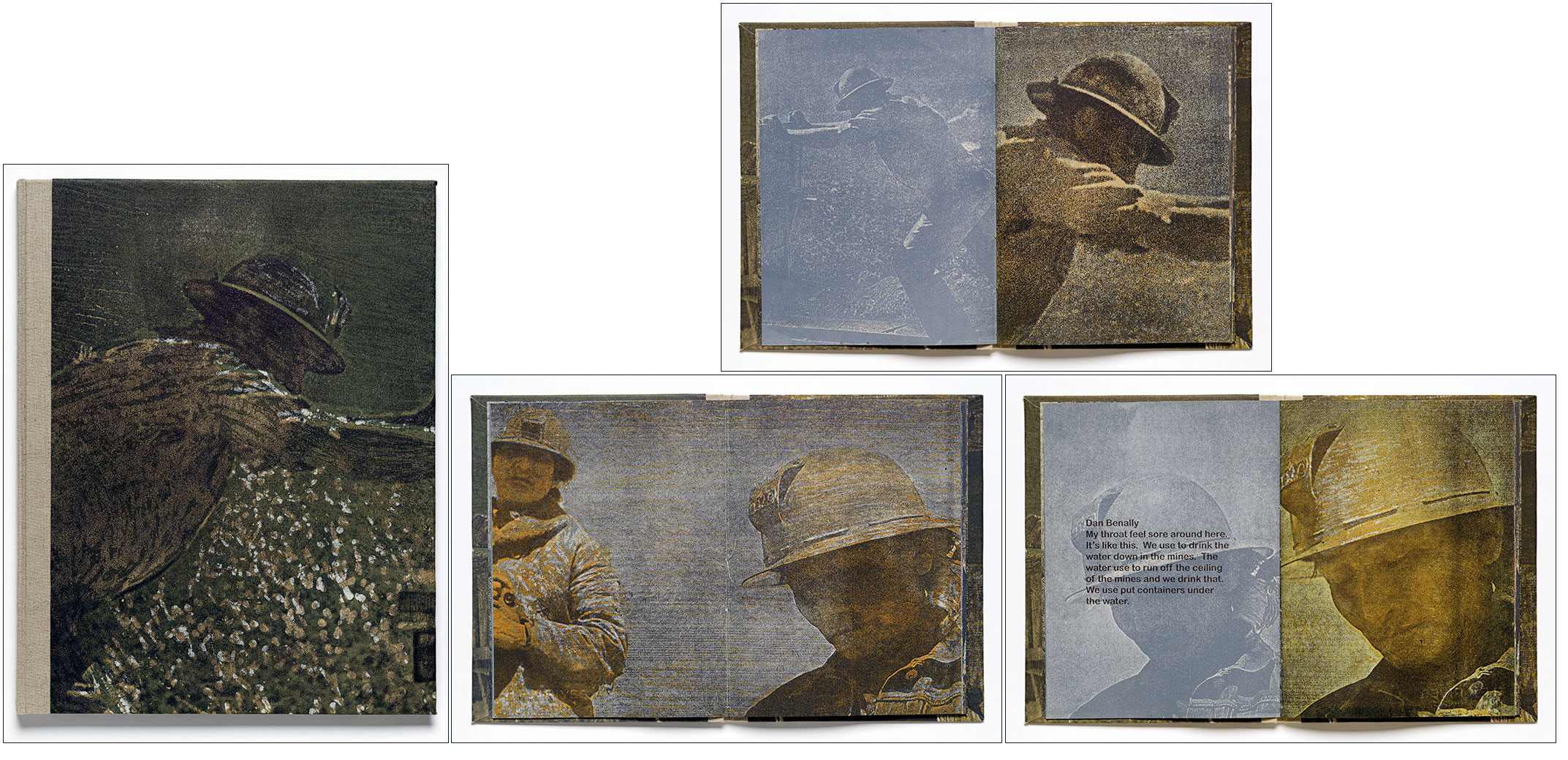
Testing: Book Three Navajo Uranium Miners 15 x11.5”; 28 pages. Printed in relief. Font is Ariel. Quotes used with permission from the Navajo Nation Museum. Signed and numbered by the artist. Bound in illustrated boards with cloth spine. Fred Hagstrom: “’Testing: Book Three- Navajo Uranium Miners’ tells the stories of the Navajo miners, and their families, as they dealt with the health consequences of their work in the mines. The quotes are all from the miners and their family members, documenting the poor health conditions in the mines, and the experiences of living close to the mines and the tailings piles. Quotes were used with permission from the Navajo Nation Museum.” Quotes from miners: Dan Benally: “My throat feel sore around here. It's like this. We use to drink the water down in the mines. The water use to run off the ceiling of the mines and we drink that. We use put containers under the water.” Dorothy Mae Zohannie: “She (the doctor) told my dad that it's the uranium, you know, that the coughing up blood is from uranium. But this was never recorded into his medical records. And also his own X-ray were all destroyed… which we never knew about after they have been dead for, after they haven't been dead for five years.” LeRoy Deal: “The only thing we got was earplugs. What was going down our throats, they did nothing about. We drank water that ran out of the cracks in the rocks. It must have been uranium water.” George Tutt: “When work stopped at the end of the shift, they just got out of the mines and went straight home. They were not told to wash or anything like that. “It was spread out, pure yellow. We transported it in wheelbarrows. It was called uranium. Our clothes we worked in were all washed at home. So they were exposed to it.” |
 Click image for more |
|
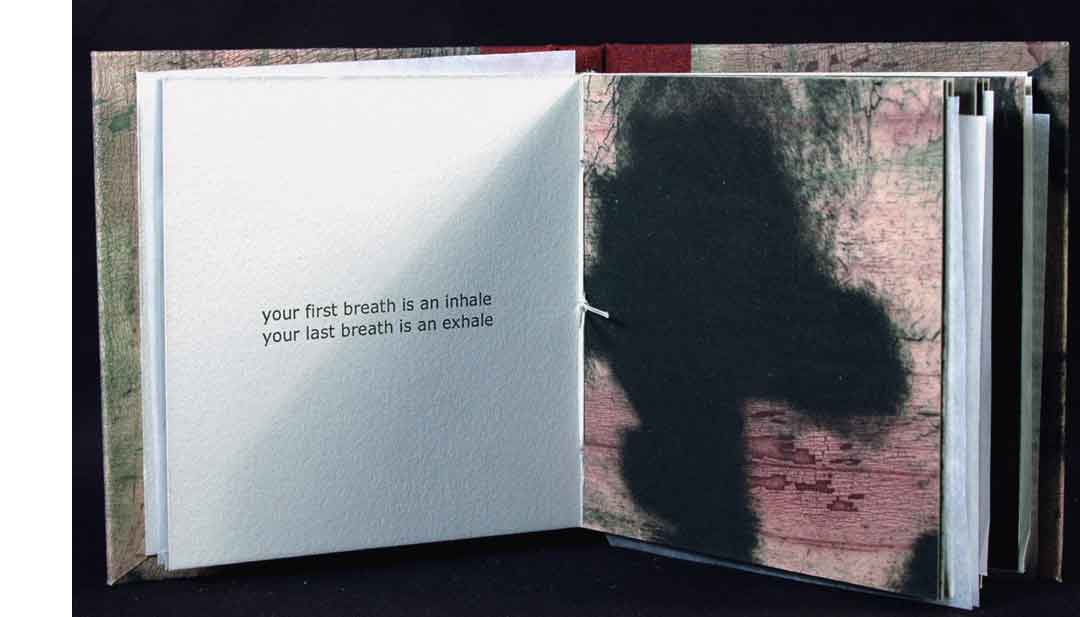
your life in two's 4.25 x 4.5"; 24 pages. Intaglio,chine-collé, letterpress. Text and images by Fred Hagstrom. Numbered but unsigned. Fred Hagstrom: "This is a small book and short text about the rhythm of breathing in our lives." Text excerpt:
(SOLD/Out of Print)
|
 Click image for more |
|
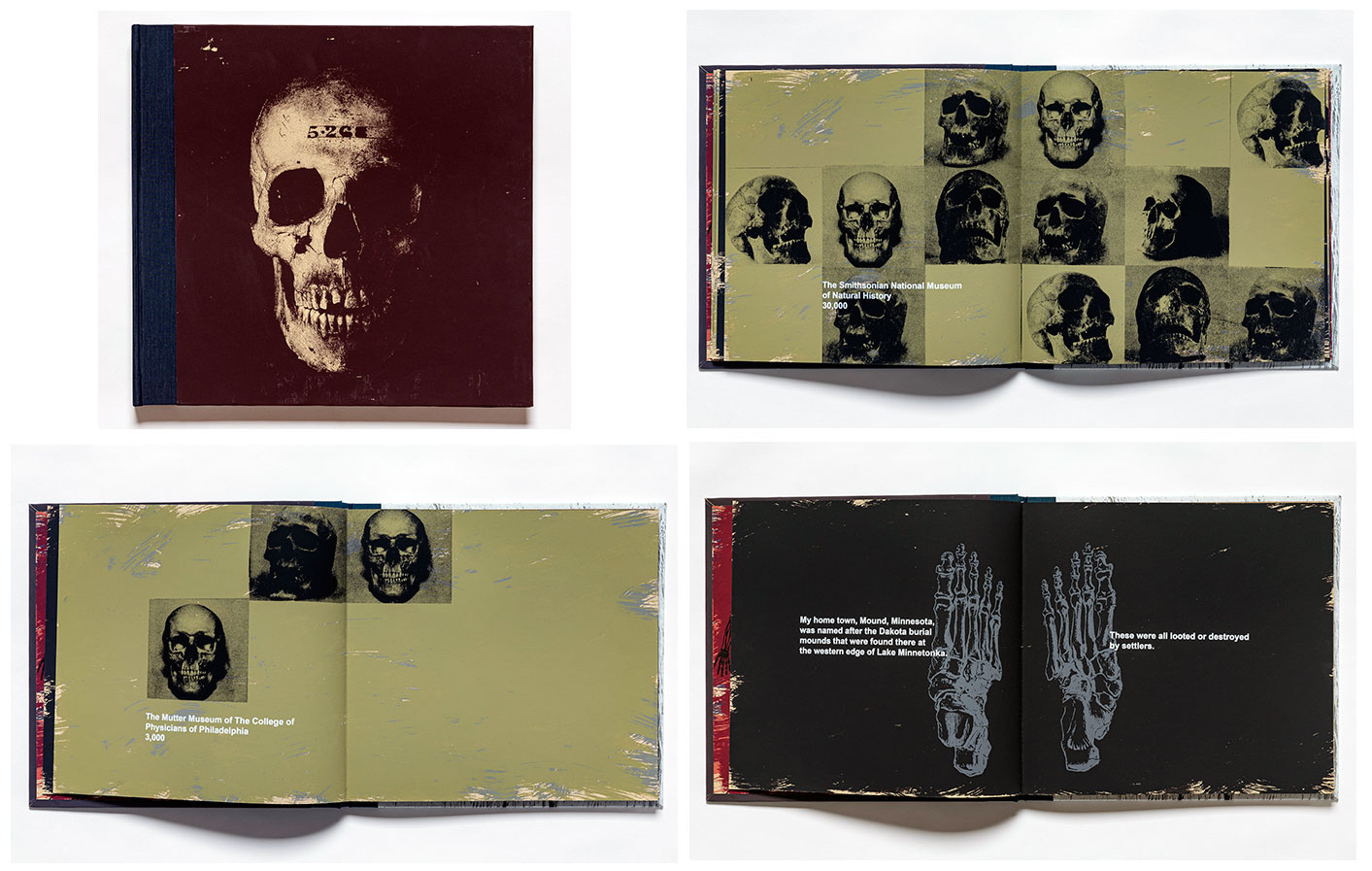
Watching Bones 13.5 x 13"; 26 pages. Printed in silkscreen. Drum leaf binding with cloth spine and silk screen boards. Pastedowns and endpapers silk screen of skeletons on red background. Research reference "Bone Rooms" by Samuel J. Redman. Signed and numbered by the artist. Fred Hagstrom: "This book is about the large number of human remains held by U.S. museums. They are predominantly the remains of Native Americans and were often acquired through dubious circumstances. Estimates place to the total number of human remains in collections as high as 500,000." Text Excerpt 1: “The American Indian must be assigned a lower position on the human scale than has been believed heretofore.” George Ortis at the Army Medical Museum. Text Excerpt 2: “I disinterred the heads and sent the skulls to the Army Medical Museum, as they showed the so-called explosive action of a bullet passing through a skull.” William Henry Corbusier (1844-1930) army surgeon. |
 Click image for more |
|
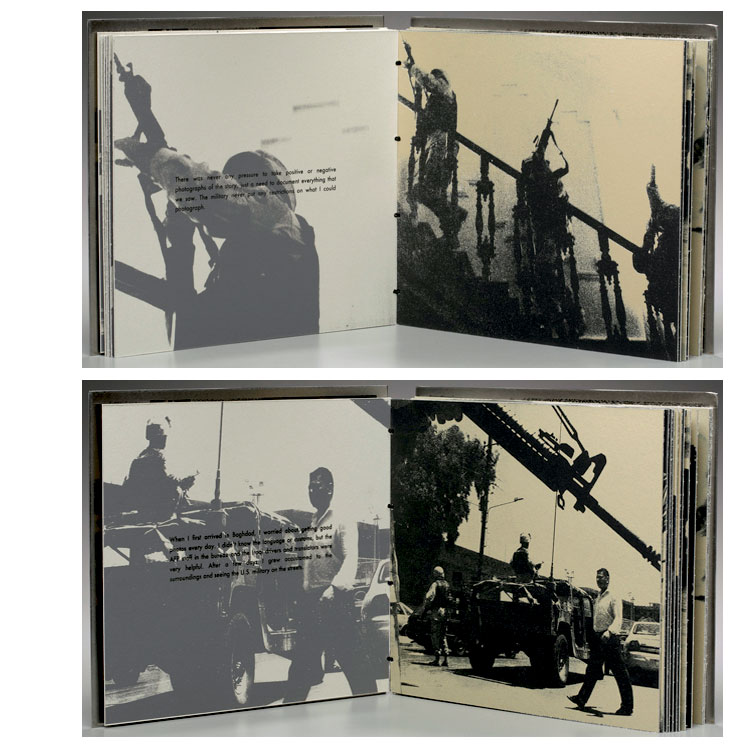
| When I First Arrived in Baghdad By Stan Honda St. Paul, Minnesota: Strong Silent Type Press, 2011. Edition of 35. 11 x 10 x 1"; 26 pages. Printed in silkscreen. Photographic images. Font is Futura. Bound in stainless steel covers with wire edge binding. Fred Hagstrom: "I first contacted Stan Honda, a news photographer for Agence France Presse, in the days after September 11th. He took some of the most moving photographs of that day, including some of business people shrouded in dust and trying to get home after the collapse of the towers. These have become some of the most iconic images of that day. I was struck by the human qualities in his photos and invited him to speak at my school. We stayed in touch, and I have seen that same quality in much of his later work, including his photos from the gulf after Katrina, and from two trips to Iraq. He seems to always have a sense for bringing out the human part of these stories. For this book, I asked him to give me a selection of his Iraq photos and to respond to a brief sort of interview for me to generate the text. I then printed the photos in silk-screen, pairing them with his words. Together they do the best of journalism: a human perspective on a complicated moment in history." (SOLD/Out of Print) |
||
| When Men Are Hungry Printed and designed by Fred Hagstrom St. Paul, Minnesota: Strong Silent Type Press, 2014. Edition of 36. 10.5 x 7.25"; 68 pages. Letterpress printed on Frankfurt Smooth paper using Futura font. Codex binding with cloth spine and silkscreen covers. Signed and numbered by the artist on the colophon. Fred Hagstrom: "This book is on the history of the Dakota uprising of 1862. It was printed 152 years after that event in Minnesota, on land that had been the home of the Dakota. "The Dakota had been forced onto a small portion of their land in a reserve that was unable to sustain them. Promised gold payments were late and were often skimmed off by profiteering traders. Faced with starvation, the Dakota fought back, killing hundreds of settlers. After a period of six weeks, they were captured and imprisoned. Over that winter, many died in a concentration camp at Fort Snelling. 38 Dakota men were hanged in a mass execution. Eventually, the Dakota were removed from the state. They have never received compensation for the loss of their homeland." (SOLD/Out of Print) |
||
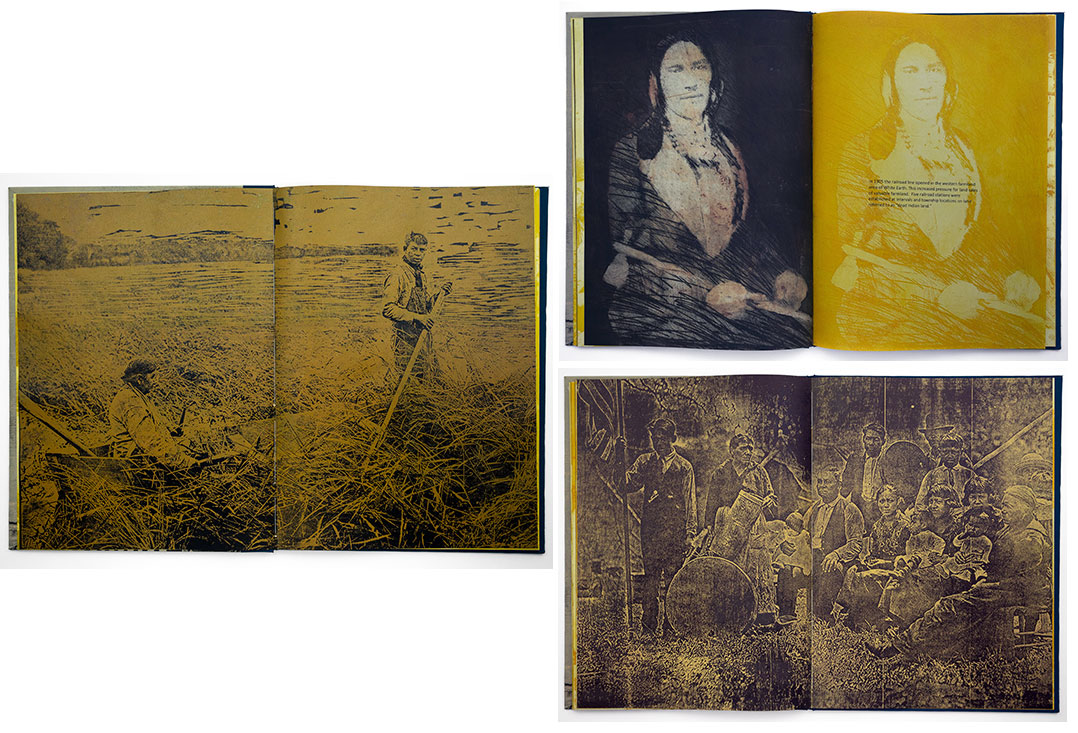
The White Earth 13.5 x 18.5"; 34 pages. Printed in intaglio and laser cut woodcut. Bound in cloth boards with image on cover. Signed and numbered by the artist. Fred Hagstrom: "This is the story of how one of the largest reservations in Minnesota saw the land held by native people reduced to a fraction of what had been promised to them." Wikipedia, as of 6/4/2020: "The White Earth Reservation was created on March 19, 1867, during a treaty signing in Washington, DC. Ten Ojibwe Indian chiefs met with President Andrew Johnson at the White House to negotiate the treaty. The chiefs Wabanquot (White Cloud), a Gull Lake Mississippi Chippewa, and Fine Day, of the Removable Mille Lacs Indians, were among the first to move with their followers to White Earth in 1868. "The reservation originally covered 1,300 square miles (3,400 km²). Much of the community's land was improperly sold or seized by outside interests, including the US Federal government, in the late 19th century and early 20th century. According to the Dawes Act of 1887, the communal land was to be allotted to individual households recorded in tribal rolls, for cultivation in subsistence farming. Under the act, the remainder was declared surplus and available for sale to non-Native Americans. The Nelson Act of 1889 was a corollary law that enabled the land to be divided and sold to non-Natives." |
 Click image for more |
|
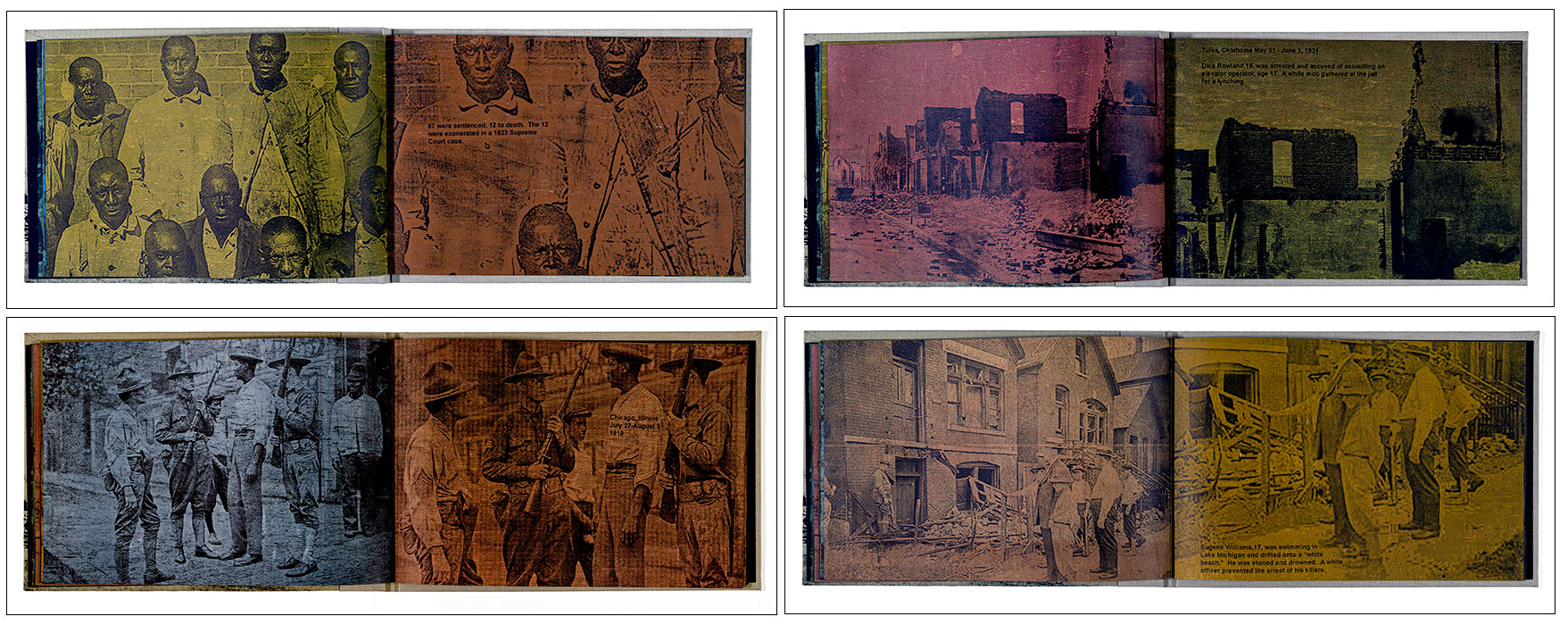
White Riots 19 x 13"; 34 pages. Printed in relief from laser cut woodblocks. Silkscreen cover. Drum leaf binding. Signed and numbered by the artist. Fred Hagstrom: "'White Riots' documents the violence by white mobs in several black communities from 1918 to 1921: Tulsa Oklahoma, East St Louis Missouri, Chicago Illinois, and Elaine Arkansas. In each case, an incident led to an uprising that decimated African American communities with killings and destruction of property. There were numerous similar incidents across the country at this time. While the recent anniversary has brought attention to the Tulsa massacre, many of the other similar events are less well known." |
||
Page last update: 05.30.2025

Home | About Us | Contact Us | New Arrivals | Fine Press & Artists' Books | Broadsides |Resource Books | Order/Inquiry
Copyright © 2021 Vamp & Tramp, Booksellers, LLC. All rights reserved.